Introduction: Why Most Email Marketing Fails (and How to Avoid It)
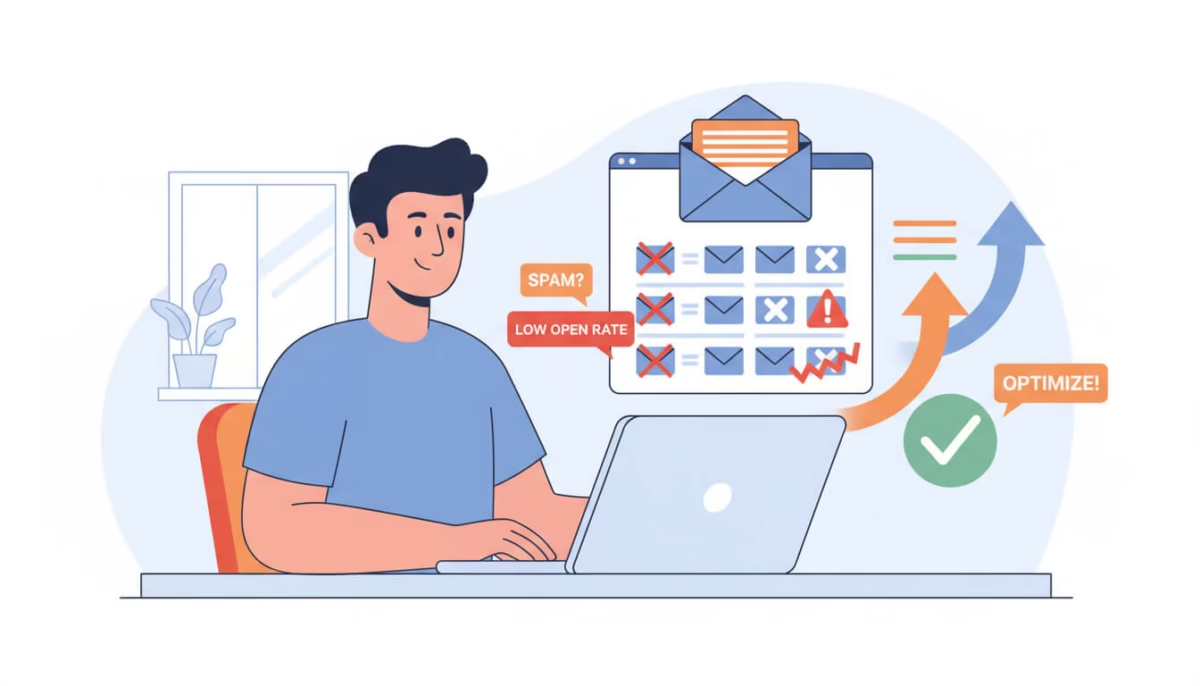
Email marketing is one of the most powerful tools for growing an online business — but only when it’s done right. For beginners, the problem isn’t a lack of effort. It’s making small, common mistakes that quietly kill engagement, damage deliverability, and slow growth before results ever appear.
Mistakes like:
- Sending emails too often (or not often enough)
- Ignoring segmentation
- Focusing on sales too early
- Neglecting list hygiene
The good news? These mistakes are easy to fix once you know what to look for.
In this guide, you’ll learn the most common email marketing mistakes beginners make — and how to avoid them so your emails actually get opened, read, and acted on.
1. Not Building an Eail List the Right Way
One of the biggest email marketing mistakes beginners make happens before the first email is ever sent.
1.1 Buying or Scraping Email Lists
Buying email lists may seem like a shortcut, but it’s one of the fastest ways to:
- Damage your sender reputation
- Trigger spam filters
- Get blacklisted by email providers
People who didn’t ask to hear from you won’t engage — and low engagement hurts deliverability for your entire list.
Correct approach:
Build your list organically using opt-in forms, landing pages, and lead magnets.
1.2 Weak or Generic Lead Magnets
If your lead magnet isn’t valuable, subscribers won’t engage after signing up.
Common mistakes include:
- Offering vague PDFs
- Giving away low-effort content
- Promising value but delivering fluff
Your lead magnet should solve one specific problem quickly.
1.3 Not Setting Expectations at Signup
If subscribers don’t know:
- What you’ll send
- How often you’ll send
- Why it’s useful
They’re more likely to ignore future emails.
Always set expectations clearly on your signup form or welcome email.
2. Sending Emails Without a Clear Goal
Every email you send should have one purpose, the opposit is one of the most email marketing mistakes. Beginners often skip this step — and it shows.
2.1 Trying to Do Too Much in One Email
Emails that try to:
- Teach
- Sell
- Entertain
- Announce
All at once usually fail.
Too many CTAs confuse readers and reduce clicks.
2.2 Not Thinking About the Reader
Emails written from the sender’s perspective:
- Talk too much about the business
- Focus on features instead of benefits
- Lack empathy
Successful email marketing is reader-first.
Ask yourself: “What’s in this for them?”
2.3 No Call-to-Action (or Too Many)
If readers don’t know what to do next, they won’t do anything.
Every email should include:
- One primary CTA
- Clear, action-oriented language
- A logical next step
Clarity increases engagement.
3. Sending the Wrong Type of Content
One of the fastest ways to lose subscribers is by sending emails that don’t match what people signed up for. That is the one of the biggest email marketing mistakes beginners make.
3.1 Selling Too Much, Too Soon
Beginners often jump straight into promotions.
Why this fails:
- Trust hasn’t been built yet
- Subscribers don’t understand your value
- Emails feel pushy
Before selling, focus on:
- Education
- Helpful tips
- Quick wins
Value builds permission to sell later.
3.2 Sending Content That Lacks Relevance
Generic emails feel forgettable.
Common issues include:
- Broad advice without context
- Content unrelated to the lead magnet
- Repeating the same message
Use segmentation and behavior-based data to tailor content whenever possible.
3.3 Ignoring Storytelling and Personality
Emails that feel robotic don’t get read.
Simple stories:
- Increase retention
- Build connection
- Humanize your brand
Even short personal insights can make a big difference.
4. Inconsistent Email Frequency
Inconsistency confuses subscribers and hurts engagement.
4.1 Sending Too Often
Daily emails without strong value:
- Increase unsubscribes
- Trigger spam complaints
- Burn out your list
More emails don’t always mean more revenue.
4.2 Sending Too Rarely
If subscribers don’t hear from you:
- They forget who you are
- They stop opening
- Your emails feel unexpected
Consistency builds familiarity and trust.
4.3 Finding the Right Balance
For most beginners:
- 1–2 emails per week works well
- Stick to a predictable schedule
- Adjust based on engagement metrics
Your audience will tell you what works.
5. Ignoring Email Deliverability Basics
Many beginners focus on writing emails — but forget whether those emails even reach the inbox. Ignoring email deliverability is on of email marketing mistakes to avoid.
5.1 Skipping Domain Authentication
Not setting up:
- SPF
- DKIM
- DMARC
Signals low trust to inbox providers.
Most email tools guide you through setup — skipping it is a costly mistake.
5.2 Using Spammy Language
Overusing:
- ALL CAPS
- Excessive emojis
- Trigger phrases
Can reduce inbox placement.
Write naturally. Clarity beats hype.
5.3 Not Cleaning Your Email List
Keeping inactive subscribers:
- Lowers engagement rates
- Hurts sender reputation
- Increases spam risk
Regular list hygiene improves performance.
6. Poor Email Design and Mobile Experience
Even great content fails if the email is hard to read or interact with.
6.1 Ignoring Mobile Optimization
Most emails are opened on mobile devices.
If your email isn’t mobile-friendly, you lose engagement instantly.
Common mobile mistakes:
- Multi-column layouts
- Tiny fonts
- Hard-to-tap links
Use single-column designs and readable font sizes (16px+).
6.2 Cluttered Layouts ad Too Many Images
Over-designed emails:
- Distract from the message
- Increase load times
- Reduce clicks
White space improves readability and CTA visibility.
6.3 Weak or Hidden CTAs
If your CTA blends into the design, readers won’t act.
Best practices:
- One primary CTA
- Clear button design
- Action-focused language
Design should guide attention — not compete with it.
7. Misusing Automation (or Not Using It at All)
Automation can help beginners scale — or cause damage if used poorly.
7.1 Sending Automated Emails Without Context
Automations that feel generic:
- Reduce trust
- Feel robotic
- Get ignored
Always personalize and add context to automated emails.
7.2 Forgetting to Update Automations
Outdated links, offers, or references:
- Create confusion
- Break trust
- Waste opportunities
Review automations every few months.
7.3 Not Using a Welcome Sequence
Skipping a welcome sequence means missing:
- High engagement opportunities
- Early trust-building
- First conversions
Welcome emails often have the highest open rates.
8. Not Tracking the Right Email Metrics
Many beginners either track nothing — or track the wrong things.
8.1 Obsessing Over Open Rates Alone
Open rates are useful, but not enough.
Also track:
- Click-through rate (CTR)
- Conversions
- Unsubscribes
Sales and engagement matter more than opens alone.
8.2 Ignoring Negative Signals
High unsubscribes or spam complaints are warning signs.
These metrics tell you when:
- Content isn’t resonating
- Frequency is too high
- Targeting is off
Use data to adjust, not ignore.
8.3 Not Testing and Improving
Without testing:
- Subject lines
- CTAs
- Send times
Growth stays slow.
Even small improvements compound.
9. Mindset Mistakes That Hold Beginners Back
Some email marketing mistakes aren’t technical — they’re mental.
9.1 Expecting Instant Results
Email marketing is a long-term channel, not a quick win.
Beginners often quit too early because:
- Lists start small
- Engagement grows gradually
- Trust takes time
Consistency beats intensity. Results compound.
9.2 Copying What Big Brands Do
What works for large brands doesn’t always work for beginners.
Mistakes include:
- Overly polished corporate tone
- Aggressive promotions
- Complex funnels
Beginners win by being personal, helpful, and human.
9.3 Overthinking Every Email
Waiting for “perfect” emails leads to:
- Delays
- Inconsistency
- Missed opportunities
Simple, clear emails sent consistently outperform perfect emails sent rarely.
10. How to Fix These Mistakes (Without Starting Over)
The good news? You don’t need to rebuild your email marketing from scratch.
10.1 Audit Before You Change
Start by reviewing:
- Recent open and click rates
- Unsubscribe trends
- Automation workflows
Identify the biggest issue first — not everything at once.
10.2 Improve One Area at a Time
Focus on:
- Better subject lines
- Clearer CTAs
- More relevant content
Small changes deliver noticeable improvements.
10.3 Focus on Long-Term Trust
Trust is the real conversion driver.
Build it by:
- Sending value-first emails
- Respecting subscriber attention
- Being transparent and consistent
Sales follow trust — always.
Conclusion: Avoid These Email Marketing Mistakes and Grow Faster
Email marketing doesn’t fail because it’s outdated — it fails because beginners unknowingly sabotage it.
By avoiding common mistakes like:
- Building low-quality lists
- Sending unfocused emails
- Ignoring deliverability basics
- Overusing automation
- Skipping analytics
You give your email marketing a real chance to succeed.
Remember: email marketing rewards clarity, consistency, and respect for your audience.
You don’t need advanced tools or complex funnels to start. You need:
- A clean list
- Valuable content
- Clear goals
- Willingness to improve
Fix the fundamentals, and email marketing becomes one of the most reliable growth channels for your online business.
👉 Next step:
Pick one mistake from this guide and fix it this week. Small corrections today lead to better engagement, stronger deliverability, and higher results tomorrow.
Keep Learning, Keep Growing
Here are more guides to level up your email marketing: