
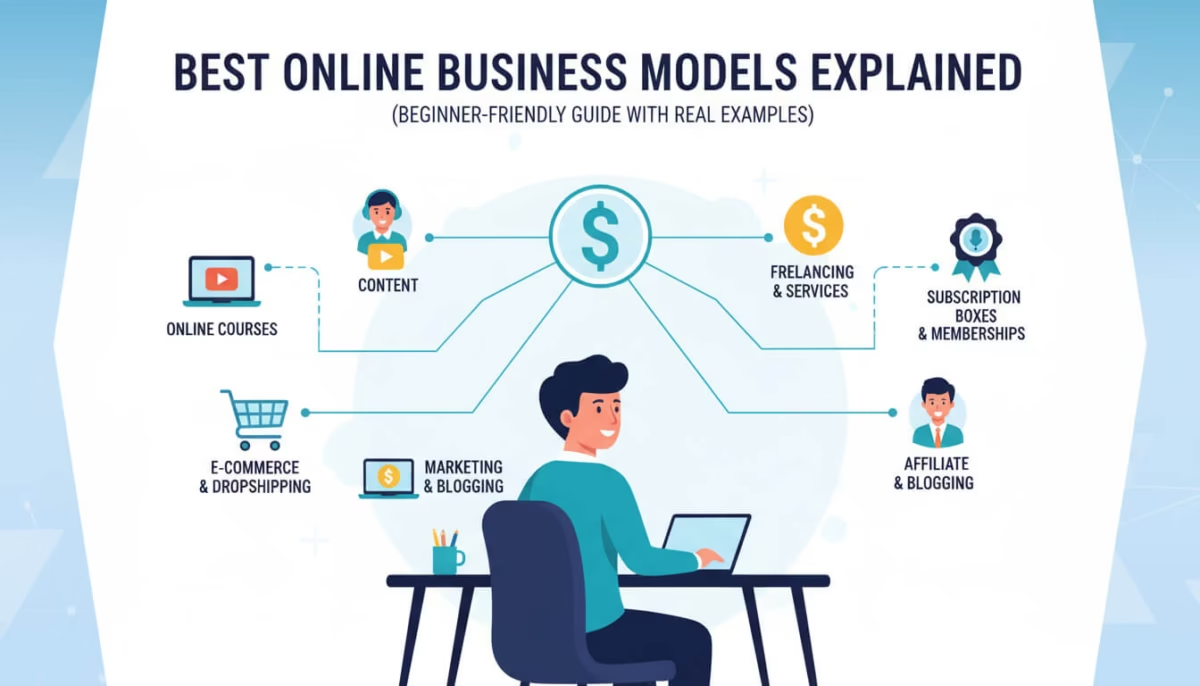
Introduction: Choosing the best Online Business Models Matters More Than You Think
If you’re researching “best online business models”, you’re already asking the right question.
Most beginners fail online not because they’re lazy or not smart — but because they choose the wrong model for their situation:
- too expensive
- too complex
- too slow
- or not aligned with their skills
An online business model is simply how your business makes money online.
And here’s the key truth:
You don’t need the “best” online business model.
You need the best one for you.
In this guide, I’ll break down the most proven online business models, explain how each one works, who it’s best for, and show real-world examples with links so you can see them in action.
No hype. No vague theory. Just clarity.
1. Freelancing & Online Services (Best online business models to Start)
(One of the Best Online Business Models to Start)
What this business model is
Freelancing is one of the best online business models because it’s simple, flexible, and skill-based. Instead of creating a product or managing inventory, you sell your skills and services online to individuals or businesses that need help.
In a freelance business, you trade:
- Time – the hours you work
- Expertise – what you already know (or can learn quickly)
- Problem-solving – helping clients achieve a specific result
…in exchange for direct payment, often paid per project, per hour, or per task.
Unlike many online business models, freelancing doesn’t require a large audience, ads, or a website to get started. You can begin as soon as you have a marketable skill.
Common freelance services
One reason freelancing is considered one of the best online business models is the wide range of services you can offer. Some of the most in-demand freelance services include:
- Writing & editing (blog posts, emails, web content, copywriting)
- Graphic design (logos, social media graphics, branding)
- Web development (websites, landing pages, maintenance)
- SEO & email marketing (traffic growth, lead generation, automation)
- Virtual assistance (admin work, research, customer support)
The key advantage is that these skills are needed right now by businesses of all sizes.
Why this model works so well
Freelancing stands out among the best online business models for several reasons:
- Almost zero startup cost – no inventory, no ads, no office
- Fastest way to make money online – get paid as soon as you land a client
- Existing demand – businesses are actively searching for freelancers daily
- Scalable over time – raise rates, specialize, or outsource work
Because you don’t need to build a product or wait months for traffic, freelancing is often the first income-generating online business people succeed with.
This is why freelancing is often recommended as the best online business model for beginners.
Real-world platforms to get started
You don’t need your own website at the beginning. These platforms already have traffic and clients looking for services:
- Upwork – a global freelance marketplace with long-term projects
👉 https://www.upwork.com - Fiverr – service-based gigs that are beginner-friendly
👉 https://www.fiverr.com - Toptal – a high-end platform for experienced freelancers
👉 https://www.toptal.com
Each platform supports a different stage of your freelancing journey.
How freelancers evolve over time
One powerful reason freelancing is among the best online business models is its growth potential. Many freelancers don’t stay freelancers forever. They later turn their skills into:
- Agencies (hiring others to deliver services)
- Consulting (charging for strategy instead of execution)
- Productized services (fixed-price, repeatable offers)
What starts as selling your time can evolve into a scalable online business with higher income and more freedom.
Bottom line:
If your goal is to start quickly, learn how online income works, and generate cash without high risk, freelancing remains one of the best online business models you can start today.
2. Affiliate Marketing (The Best Low-Cost of All Long-Term Online Business Models)
What this business model is
Affiliate marketing is one of the best online business models if your goal is to build long-term income with minimal upfront investment. It works by promoting other people’s products or services and earning a commission every time someone makes a purchase through your unique affiliate link.
With affiliate marketing, you don’t have to:
- Create your own products
- Handle payments or refunds
- Deal with customer support
Instead, you focus on what actually drives sales:
- Content that educates or solves problems
- Traffic from search engines, social media, or email
- Trust with your audience
This makes affiliate marketing ideal for creators, bloggers, and educators who want leverage without operational complexity.
How affiliate marketing works (simple flow)
The process is straightforward and beginner-friendly:
- You create helpful content (blog post, video, email, or social post)
- You recommend a product using an affiliate link
- A visitor clicks the link and buys
- You earn a commission, sometimes repeatedly
Once content ranks or gains traction, this becomes a passive-style income system, which is why affiliate marketing is considered one of the best long-term online business models.
Why people choose affiliate marketing
Affiliate marketing is popular because it combines simplicity with scalability:
- Very low startup cost – often just a domain or free platform
- Highly scalable – one article or video can generate income for years
- Perfect for content-based platforms like blogs, YouTube, and email lists
- Location-independent – run it from anywhere
Because you’re not limited by time-for-money, affiliate marketing can outperform freelancing in the long run.
The trade-off?
It takes time to build traffic and authority. Unlike freelancing, income is delayed—but once it starts, it can grow exponentially.
Affiliate marketing platforms
Some of the most widely used affiliate networks include:
- Amazon Associates – physical products across almost every niche
👉 https://affiliate-program.amazon.com - ClickBank – digital products with high commission rates
👉 https://www.clickbank.com - PartnerStack – SaaS and software affiliate programs
👉 https://partnerstack.com
Many successful bloggers, niche site owners, and YouTubers rely heavily on affiliate income as their primary revenue stream.
Why affiliate marketing is a top long-term model
Affiliate marketing stands out among the best online business models because it rewards patience. Content compounds, trust deepens, and income becomes less dependent on daily work.
If you want a business that grows while you sleep, affiliate marketing is hard to beat.
3. Content-Based Businesses(Blogging, YouTube, Social Media)
What this business model is
Content-based businesses revolve around one core idea: create valuable content, grow an audience, and monetize attention. This is one of the most powerful and flexible online business models ever created.
Instead of selling directly, you build influence first—and income follows.
Common monetization methods
Once you have an audience, you can monetize in multiple ways:
- Ads (display ads, YouTube ads)
- Affiliate links (recommended tools and products)
- Sponsorships (brands pay for exposure)
- Your own products (courses, services, memberships)
This diversification makes content-based businesses extremely resilient.
Platforms commonly used
Different platforms serve different strengths:
- Blogs – long-term SEO traffic and passive income
- YouTube – video, personality, and high trust
- Instagram / TikTok – fast reach and brand building
Many creators combine platforms for maximum impact.
Why this model works
Content businesses are among the best online business models because they compound over time:
- Audience growth compounds like interest
- Multiple income streams reduce risk
- High trust leads to higher conversions
- Strong personal brand creates long-term leverage
Once established, content businesses can generate income even during inactive periods.
The downside
Despite the upside, there are challenges:
- Slow results at the beginning
- Requires consistency and patience
- Income is unpredictable early on
Most people quit too early—those who persist gain a massive advantage.
Real-world examples
These creators built empires using content-first business models:
- Pat Flynn – Smart Passive Income (blog + podcast + affiliate marketing)
👉 https://www.smartpassiveincome.com - Neil Patel – content + SEO + digital products
👉 https://neilpatel.com - MrBeast – YouTube content scaled into multiple businesses
👉 https://www.youtube.com/@MrBeast
4. eCommerce (Physical & Digital Products)
What this business model is
You sell products online through a store or platform.
Two main types:
- Physical products (dropshipping, print-on-demand)
- Digital products (ebooks, templates, courses)
Physical eCommerce (harder for beginners)
Pros:
- high demand
Cons: - shipping
- customer service
- margins
Platforms:
- Shopify 👉 https://www.shopify.com
- WooCommerce 👉 https://woocommerce.com
Digital products (beginner-friendly)
Pros:
- no inventory
- high margins
- instant delivery
Platforms:
- Gumroad 👉 https://gumroad.com
- Podia 👉 https://www.podia.com
5. Online Coaching, Consulting & Education
What this business model is
You sell:
- knowledge
- experience
- guidance
Instead of time-for-money freelancing, you sell outcomes.
Examples:
- business coaching
- fitness coaching
- marketing consulting
- online courses
Why this model is powerful
- very high profit margins
- fewer clients, more income
- authority-based
Downside:
- requires trust and credibility
Real examples
- Kajabi (courses & coaching)
👉 https://kajabi.com - Teachable (online education)
👉 https://teachable.com
6. Subscription & Membership Business Models (Predictable Income)
What this business model is
A subscription or membership model charges customers recurring payments (monthly or yearly) for continued access to:
- content
- tools
- communities
- services
Instead of chasing new sales constantly, you build stable, predictable income.
Common subscription examples
- paid newsletters
- private communities
- software tools
- membership websites
Why this model is powerful
- recurring revenue
- easier financial planning
- strong customer loyalty
Downside:
- requires ongoing value
- churn management matters
Real examples
- Substack (paid newsletters)
👉 https://substack.com - Patreon (creator memberships)
👉 https://www.patreon.com - Memberstack (membership tech)
👉 https://www.memberstack.com
This model often works best after you already have an audience.
7. SaaS & Tech-Based Online Businesses (High Scale, Higher Complexity)
What this business model is
SaaS (Software as a Service) means you build a tool that users pay for repeatedly.
Examples:
- project management tools
- accounting software
- AI tools
- productivity apps
Why people are attracted to SaaS
- extremely scalable
- high valuations
- recurring revenue
Reality check for beginners
Pros:
- huge upside
Cons: - technical skills required
- development cost
- customer support
- maintenance
Real examples
- Notion (productivity SaaS)
👉 https://www.notion.so - Canva (design SaaS)
👉 https://www.canva.com - Stripe (payment infrastructure)
👉 https://stripe.com
💡 Tip: Many beginners start by validating ideas with no-code tools before going full SaaS.
8. Which Online Business Model Is Best for Beginners?
There is no single “best” model — only the best match for your situation.
Start freelancing if:
- you need money fast
- you already have a skill
- you want minimal risk
Choose affiliate marketing or content if:
- you can be patient
- you like writing or video
- you want long-term income
Prefer digital products or coaching if:
- you have experience to share
- you want scalability
- you prefer leverage over time
Choose SaaS if:
- you have technical skills
- you can invest time and money
- you think long-term
👉 Many successful entrepreneurs combine models over time.
Conclusion: Start Simple, Then Scale Smart
The biggest mistake beginners make is overthinking.
You don’t need:
- a perfect idea
- a big budget
- advanced tools
You need:
- one proven online business model
- consistent execution
- patience
Start with the simplest model you can realistically execute today.
Learn.
Earn.
Then scale into more advanced models later.
Online businesses are not built overnight — but they are built step by step.
🔑 Key Takeaways
- An online business model is simply how you make money online
- Freelancing is the fastest and easiest model to start
- Affiliate marketing and content take longer but scale well
- Digital products and coaching offer high margins
- Subscription models provide predictable income
- SaaS has the highest upside but also the highest complexity
- The best model is the one you can start and stick with
Next steps
Looking to further enhance your online business journey? Check out these valuable resources to help you navigate and excel in various aspects of building and growing your online presence:
- Essential Tools for Starting an Online Business – Discover the must-have tools to set up and grow your online business. Find out what you need to succeed!
- How to Start an Online Business from Scratch– A comprehensive guide for beginners to kickstart their online business journey. Get started on your path to success!
- Building Online Presence As A Freelancer: A comprehensive Guide – Tips and strategies to enhance your online presence as a freelancer. Elevate your freelance career now!
For more informations or some questions, feel free to contact me on my contact page. And if you want, you can subscribe to my email list for more content like this. However, you can unsubscribe at everytime.

