
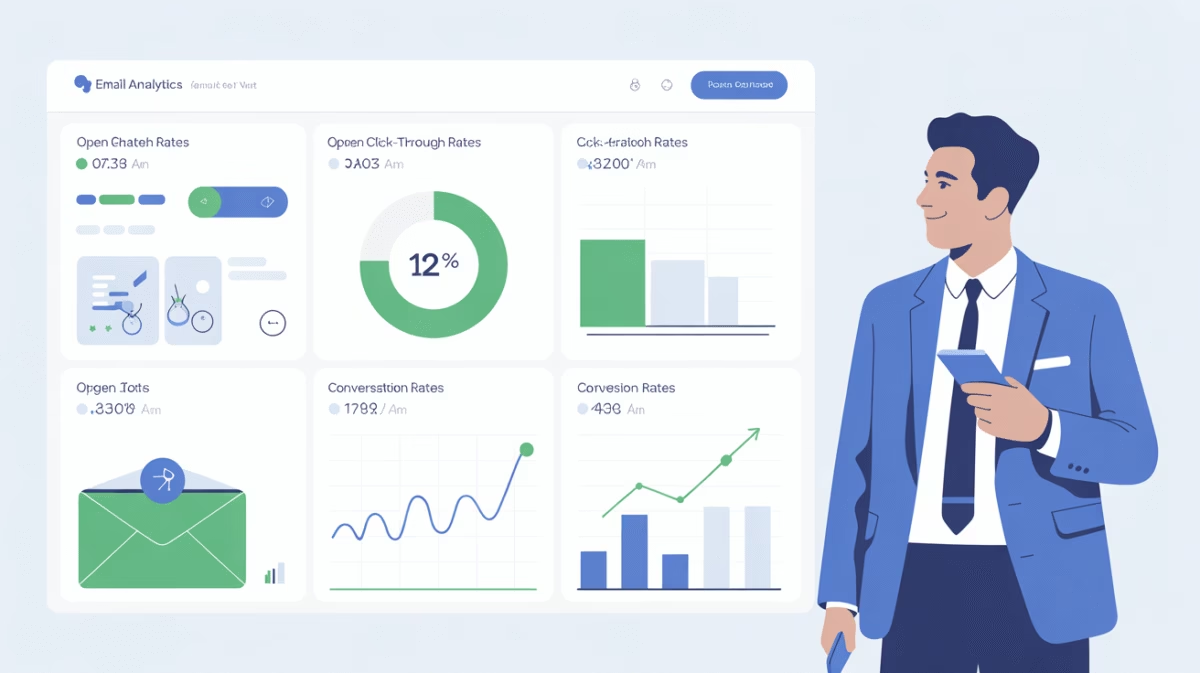
Introduction: Why Email Marketing Metrics Matter
Sending emails without tracking results is like driving with your eyes closed.
Email marketing metrics tell you what’s working, what’s failing, and what to improve. Without them, you’re guessing — and guessing leads to wasted time, poor engagement, and missed revenue.
The good news? You don’t need to be a data expert to understand email metrics. Once you know which numbers actually matter, tracking success becomes simple and actionable.
In this guide, you’ll learn:
- The most important email marketing metrics (explained simply)
- What each metric tells you about your campaigns
- Which metrics beginners should focus on first
- How to use data to improve opens, clicks, and conversions
Whether you run newsletters, affiliate emails, ecommerce campaigns, or automated funnels, these metrics will help you make smarter decisions and grow faster.
1. What Are Email Marketing Metrics? (Simple Definition)
Email marketing metrics are measurable data points that show how subscribers interact with your emails.
They help answer questions like:
- Are people opening my emails?
- Are they clicking links?
- Are my emails driving sales or signups?
- Are subscribers losing interest?
Each metric reflects a specific part of the email journey — from inbox placement to conversion.
Why Metrics Are Essential (Not Optional)
Tracking metrics helps you:
- Identify weak subject lines
- Improve email content
- Optimize send times
- Protect deliverability
- Increase ROI
Without metrics, you can’t scale what works or fix what doesn’t.
Metrics vs. Goals: Know the Difference
Metrics are numbers.
Goals are outcomes.
For example:
- Metric: Open rate
- Goal: More people reading your emails
Understanding this distinction helps you focus on metrics that drive real business results, not vanity numbers.
2. The Email Marketing Funnel (How Metrics Fit Together)
Email metrics make more sense when you see them as part of a funnel.
Every email campaign follows this path:
Delivered → Opened → Clicked → Converted → Retained
Each stage has its own metrics — and problems at one stage affect everything that follows.
2.1 Inbox & Delivery Metrics
These metrics tell you whether emails are reaching subscribers.
Key signals:
- Deliverability
- Bounce rate
- Spam complaints
If emails don’t reach the inbox, nothing else matters.
2.2 Engagement Metrics
Once emails arrive, engagement metrics show:
- Who opens
- Who clicks
- Who interacts
These metrics reflect content relevance and trust.
2.3 Conversion & Revenue Metrics
At the bottom of the funnel:
- Sales
- Signups
- Downloads
- Bookings
These metrics connect email performance to business growth.
Why You Shouldn’t Obsess Over One Metric
A high open rate with no clicks = curiosity without value.
High clicks with no conversions = weak offers or landing pages.
Successful email marketing is about balance across the funnel.
3. Open Rate: What It Tells You (And What It Doesn’t)
Open rate measures the percentage of subscribers who opened your email.
Why Open Rate Matters
Open rate helps you evaluate:
- Subject line effectiveness
- Sender name recognition
- Inbox placement quality
If people don’t open your emails, they’ll never see your message.
What Affects Open Rates
Several factors influence opens:
- Subject line clarity and curiosity
- Preheader text
- Sender name trust
- Send time and frequency
- List quality
A strong subject line combined with clear expectations almost always wins.
The Limitations of Open Rate
Open rates are not perfect because:
- Some email clients block tracking pixels
- Apple Mail Privacy Protection inflates opens
- An “open” doesn’t mean someone read the email
That’s why open rate should be treated as a directional signal, not a final verdict.
Healthy Open Rate Benchmarks
While benchmarks vary by industry:
- 20–30% = average
- 30–40% = strong
- 40%+ = excellent
Focus on trends, not single campaigns.
4. Click-Through Rate (CTR): Measuring Real Engagement
Click-through rate (CTR) measures how many subscribers clicked a link inside your email.
This is where interest turns into action.
Why CTR Is One of the Most Important Metrics
CTR shows:
- Content relevance
- Offer strength
- CTA clarity
Unlike opens, clicks require intent — making CTR a more reliable engagement signal.
Click Rate vs Click-Through Rate
Some tools distinguish between:
- Click rate: clicks ÷ total subscribers
- Click-through rate: clicks ÷ opens
Both are useful, but consistency matters more than the formula itself.
What Impacts Click Rates
Click behavior improves when:
- The email has one clear goal
- The CTA stands out visually
- Links are relevant and limited
- Copy focuses on benefits
Too many links usually reduce CTR.
CTR Benchmarks
Typical CTR ranges:
- 2–5% = average
- 5–10% = strong
- 10%+ = excellent
Low CTR often means unclear value — not poor writing.
5. Conversion Rate: Turning Engagement Into Results
Conversion rate tracks how many subscribers completed the desired action after clicking.
This could be:
- Making a purchase
- Signing up for a webinar
- Downloading a lead magnet
- Booking a call
This is where email performance connects directly to revenue.
Why Conversion Rate Is Critical
High clicks without conversions indicate:
- Misaligned messaging
- Weak landing pages
- Poor offer fit
Conversion rate helps identify breakdowns after the click.
What Affects Conversion Rates
Key factors include:
- Landing page clarity
- Page load speed
- Message match (email vs page)
- Trust signals
- Simplicity
Even small changes can dramatically improve conversions.
How to Improve Conversion Rate
Try:
- Matching email language to landing page headlines
- Reducing form fields
- Adding testimonials or proof
- Using urgency carefully
Email metrics don’t stop at the click — they continue through the funnel.
6. Bounce Rate & Spam Complaints: Protecting Your Sender Reputation
Not all metrics are about performance — some are about risk prevention. Bounce rate and spam complaints are two of the most important signals inbox providers watch.
6.1 Bounce Rate: What It Means and Why It Matters
Bounce rate measures the percentage of emails that couldn’t be delivered.
There are two types:
- Hard bounces: Invalid or non-existent email addresses
- Soft bounces: Temporary issues (full inbox, server error)
High bounce rates hurt deliverability and can cause inbox providers to distrust your domain.
Healthy Bounce Rate Benchmarks
- Under 2% = safe
- Over 5% = warning sign
How to Reduce Bounce Rate
- Use double opt-in where possible
- Never buy or scrape email lists
- Remove hard bounces immediately
- Clean inactive subscribers regularly
A clean list = better inbox placement.
6.2 Spam Complaints: The Most Dangerous Metric
A spam complaint happens when a subscriber clicks “Mark as spam.”
Even a small number can severely impact deliverability.
Safe Threshold
- Below 0.1% (1 complaint per 1,000 emails)
How to Reduce Spam Complaints
- Set clear expectations at signup
- Send relevant content only
- Avoid misleading subject lines
- Include a visible unsubscribe link
- Email consistently (not aggressively)
If people want to leave, let them — it’s better than a spam report.
7. Unsubscribe Rate & List Health Metrics
Unsubscribes aren’t always bad — they’re feedback.
7.1 Unsubscribe Rate: What’s Normal?
Unsubscribe rate measures how many subscribers opt out after receiving an email.
Healthy Benchmarks
- 0.1–0.5% = normal
- 1%+ = review content and frequency
A rising unsubscribe rate signals:
- Over-sending
- Misaligned expectations
- Low perceived value
Why Unsubscribes Can Be Healthy
A smaller, engaged list often:
- Gets higher open rates
- Has better deliverability
- Converts more consistently
Quality beats quantity in email marketing.
7.2 Engagement Decay (The Silent Metric)
Engagement decay happens when subscribers stop opening or clicking — without unsubscribing.
This silently damages:
- Open rates
- Inbox placement
- Sender reputation
That’s why engagement-based segmentation matters.
What to Do With Inactive Subscribers
- Reduce email frequency
- Send re-engagement campaigns
- Ask if they still want to hear from you
- Remove them if there’s no response
Inactive subscribers cost more than they’re worth.
8. Revenue Metrics: Measuring Email Marketing ROI
This is where email metrics connect to real business growth.
8.1 Revenue Per Email (RPE)
Revenue per email shows how much money each email generates on average.
Formula:
Total revenue ÷ emails sent
RPE helps you:
- Compare campaigns
- Evaluate automation vs broadcasts
- Optimize email strategy
Even small increases add up at scale.
8.2 Email Marketing ROI
ROI measures how profitable email marketing is compared to costs.
Formula:
(Revenue – Cost) ÷ Cost × 100
Email marketing consistently delivers one of the highest ROIs in digital marketing — when tracked correctly.
8.3 Why Revenue Metrics Matter More Than Vanity Metrics
High opens and clicks feel good — but revenue metrics tell the truth.
Always ask:
- Did this email move the business forward?
- Did it generate sales, leads, or long-term value?
That’s real success.
9. Email Marketing Benchmarks: What’s Considered “Good”?
Benchmarks help you understand whether your email performance is healthy, improving, or at risk. While results vary by industry, these general ranges give useful context.
Common Email Marketing Benchmarks
- Open rate: 20–30% (average), 30–40% (strong)
- Click-through rate: 2–5% (average), 5–10% (strong)
- Bounce rate: under 2%
- Spam complaints: under 0.1%
- Unsubscribe rate: 0.1–0.5%
- Conversion rate: varies by offer and industry
- Revenue per email: grows steadily with segmentation and automation
Use benchmarks as guidelines, not rigid goals. Focus on trends over time rather than chasing exact numbers.
Why Your Own Baseline Matters More
Comparing your metrics against:
- Past campaigns
- Similar list segments
- Different email types
…is often more useful than industry averages.
Improvement beats perfection.
10. Which Email Marketing Metrics Beginners Should Focus On
Tracking everything at once can feel overwhelming. Beginners should focus on a small set of high-impact metrics first.
Beginner Metric Priority List
- Open rate – subject lines and inbox placement
- Click-through rate – content and CTA clarity
- Bounce rate – list health
- Unsubscribe rate – audience alignment
- Conversion rate – real results
Once these are stable, add:
- Revenue per email
- Engagement by segment
- Automation performance
Create a Simple Tracking Habit
Instead of obsessing over dashboards:
- Review metrics after each campaign
- Note one thing that worked
- Note one thing to improve next time
Small improvements compound over time.
Conclusion: How to Use Email Marketing Metrics to Grow Smarter
Email marketing metrics aren’t just numbers — they’re signals.
They show you:
- What your audience values
- When they’re losing interest
- Which emails drive action
- Where your funnel breaks
By focusing on the right metrics, you move from guessing to growing with confidence.
Final Takeaways
- Track metrics across the entire funnel
- Prioritize engagement and revenue, not vanity stats
- Compare trends, not isolated results
- Clean your list regularly
- Use metrics to guide testing and optimization
When you treat metrics as feedback — not judgment — email marketing becomes predictable, scalable, and profitable.
Keep Learning, Keep Growing
Here are more guides to level up your email marketing: