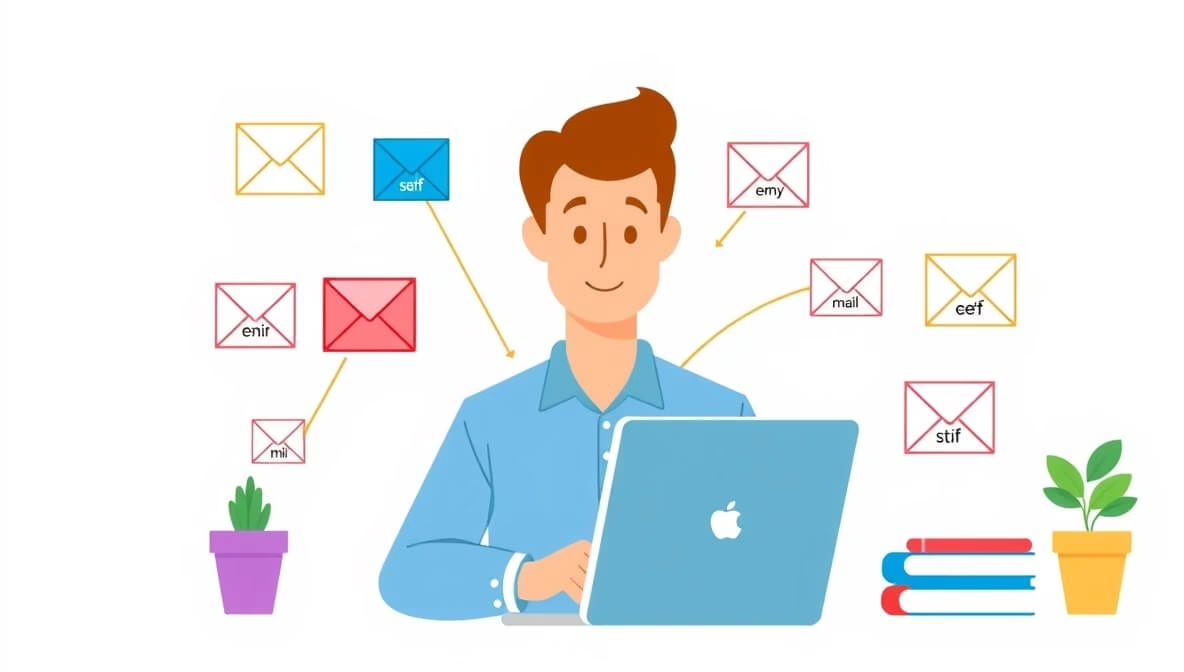
If you’ve been sending the same email to every person on your list… it’s time to level up. Not all subscribers are interested in the same things — and not all of them are ready to buy. That’s where email segmentation becomes your secret marketing advantage.
By dividing your subscribers into smaller, more relevant groups, you can send the right message to the right person at the right time — and that leads to:
- Higher email open rates
- More clicks and website traffic
- Better sales conversions
- Fewer unsubscribes
- Stronger relationships with your audience
In this beginner-friendly guide, you’ll learn:
✔ What email segmentation is
✔ Why it dramatically improves marketing results
✔ The most effective segmentation types
✔ Real examples you can apply today
✔ Tools that make segmentation easy
✔ Best practices + mistakes to avoid
Whether you’re a blogger, creator, online store owner, or affiliate marketer… this guide will help you send smarter emails that make more money.
1️⃣ What Is Email Segmentation?
Email segmentation is the process of grouping your subscribers based on shared characteristics — such as what they’re interested in, where they signed up from, or how engaged they are.
Instead of sending one generic message to everyone, segmentation allows you to tailor your content so each subscriber gets something more personalized.
Simple Example:
- Segment A: People who downloaded a fitness meal plan
➡ Send nutrition tips - Segment B: People who downloaded a home workout guide
➡ Send exercise routines
The message becomes more relevant, so people are more likely to take action.
How segmentation fits into email marketing:
Segmentation is a key part of:
- Personalization
- Automation
- Customer journey mapping
Think of segmentation as giving your emails direction — so you’re not shouting into a crowd but speaking directly to someone who cares.
2️⃣ Why Email Segmentation Improves Your Results
Here’s why marketers call segmentation a game changer:
✔ Higher Open Rates
When subscribers receive a message that speaks to their interest… they open it.
✔ More Clicks & Conversions
Relevant offers = more people saying YES.
✔ Fewer Unsubscribes
People leave when your emails don’t feel useful. Segmentation fixes that.
✔ Stronger Relationships
Personalized communication shows respect — and builds trust faster.
✔ More Revenue (From the Same List)
You don’t need more subscribers — you need to maximize the ones you already have.
📌 Key Takeaway
Email segmentation helps you deliver targeted value — which leads to better results, happier subscribers, and more consistent revenue.
3️⃣ Most Common Types of Email Segmentation
There are many smart ways to group your subscribers — but you don’t need to use them all at once. Here are the most effective segmentation types you can start with:
📍 Demographics
Basic details about your audience like:
- Age range
- Location (city, country, region)
- Language
💡 Example:
Send event promotions only to people near the location.
📍 Interests & Behavior
What content they click on, topics they engage with, or products they view.
💡 Example:
If someone keeps clicking skincare articles → send beauty product offers.
📍 Purchase History
What they’ve purchased, how often, and how recently.
Segments might include:
- First-time buyers
- VIP customers
- Expired subscribers or inactive customers
💡 Example:
Send a loyalty discount to customers who buy often.
📍 Engagement Level
How often subscribers open and click your emails.
Segments:
- Highly engaged
- Moderately engaged
- Cold or inactive subscribers
💡 Example:
Send re-engagement campaigns only to cold subscribers.
📍 Customer Journey Stage
Where they are in your sales funnel.
Examples:
- New subscribers (welcome sequence)
- Prospects considering purchase
- Post-purchase customers
💡 Example:
Send tutorials to new buyers and upsells later.
📍 Signup Source
Where they joined your list:
- Lead magnet type
- Blog topic they subscribed from
- Landing page they used
💡 Example:
Someone downloading a Beginner’s Guide receives beginner-level content.
📌 Pro Tip: Start small — even ONE of these segmentation types can dramatically increase results.
4️⃣ How to Segment Your Email List (Step-by-Step)
Here’s a simple path you can follow starting today:
Step 1 – Define Your Goal
Ask:
👉 What result do I want from segmentation?
Examples:
- Boost sales
- Improve open rates
- Promote a specific offer
Step 2 – Collect the Right Data
You can gather subscriber information through:
- Signup forms
- Click behavior in emails
- Past purchases
- Surveys & quizzes
✔ Keep it simple — don’t ask for too much upfront.
Step 3 – Create Segments in Your Email Tool
Your email marketing platform will let you group subscribers using:
- Tags
- Lists
- Filters
- Contact attributes
📌 If you need help choosing a tool, see our guide:
Best Email Marketing Tools for Beginners (internal link placeholder)
Step 4 – Personalize Your Emails Based on Each Group
Examples:
- Change the subject line
- Customize offers
- Tailor the call-to-action
- Send different automation paths
Personalization doesn’t have to be complicated — even small tweaks matter.
Step 5 – Measure Results + Improve
Track these key email metrics:
- Open rate
- Click-through rate
- Conversions
- Unsubscribes
If results improve → keep optimizing.
If not → adjust your segments and messaging.
📌 Key Takeaway: Segmentation is an ongoing strategy — not a one-time setup.
5️⃣ Email Segmentation Examples That Work
Here are practical segmentation ideas you can copy immediately:
🎯 New vs. Long-Time Subscribers
- New subscribers: Welcome series + get-to-know-you content
- Long-time subscribers: Exclusive perks + insider updates
⭐ Cold vs. Highly Engaged Subscribers
- Highly engaged → send special offers
- Cold subscribers → send re-engagement campaigns
Example CTA:
“Still want to hear from us?”
🛍️ Customers vs. Non-Customers
- Non-customers → product benefits & testimonials
- Customers → loyalty rewards, upsells, refill reminders
❤️ Interest-Based Content
Segment based on:
- clicked links
- downloaded lead magnets
- viewed pages
Example:
Fitness business → “Weight loss,” “Muscle building,” “Home workouts”
🌍 Location-Based Campaigns
- Time zone-optimized sending
- Local deal promotions
- Event announcements
💡 Device Type Segmentation
Mobile vs. desktop
Example:
Shorter, tappable buttons for mobile-only subscribers.
📌 Bonus Tip: Interest-based segmentation is usually the fastest way to increase clicks & conversions.
6️⃣ Tools That Help You Segment Your Email List
Email segmentation becomes 10x easier when you use a tool that supports tags, automation, and behavior tracking. Here are some of the best beginner-friendly options:
MailerLite
- Simple tagging system
- Behavior-based automation
- Clean, visual segmentation builder
- Great for beginners who want easy and powerful tools.
ConvertKit
- Built for creators & educators
- Tags subscribers based on actions (clicks, purchases)
- Flexible visual automation sequences
- Perfect for bloggers, YouTubers, and affiliate marketers.
Brevo (formerly Sendinblue)
- Advanced segmentation + contact scoring
- Multi-channel: email + SMS
Great for small businesses who want more communication options.
Mailchimp
- Easy to get started
- Pre-built segments + analytics
A well-known platform with tools beginners can learn fast.
What features should you look for?
✔ Tags
✔ Behavior tracking
✔ Automation workflows
✔ Analytics + reporting
✔ Subscriber data fields
📌 Key Tip: Choose a tool based on your goals — not just popularity.
7️⃣ Best Practices for Effective Segmentation
Want segmentation to work really well? Use these proven guidelines:
✔ Start With Simple Segments
Example: Engaged vs. inactive subscribers
Don’t create 20 segments when 3 will do the job.
✔ Use Behavior to Automate Tagging
Track what subscribers click or download.
Example:
Clicked a “Photography Tips” link → Add “Photography interest” tag automatically.
✔ Personalize What Matters Most
- Subject lines
- First 1–2 lines of the email
- Calls to action
Even small personalization boosts engagement.
✔ Keep Segments Clean & Updated
Review segments at least once a month:
- Remove inactive subscribers
- Update tags based on recent behavior
✔ Respect Privacy & Keep Data Minimal
Collect only what you need:
- First name
- Interest indicators
Ask for more later if necessary.
📌 Golden Rule
Always segment based on what helps the subscriber — not just what helps you sell.
8️⃣ Mistakes to Avoid When Segmenting Your List
Segmentation is powerful — but done wrong, it can actually hurt performance.
Here are the common pitfalls to avoid:
❌ Asking for Too Much Information Upfront
Long signup forms = fewer subscribers
Instead → learn from their behavior over time
❌ Creating Too Many Segments
If you overwhelm yourself, you won’t take action.
Focus on your highest-value segments first.
❌ Sending Irrelevant Content to a Segment
Example: A “Beginner’s Guide” to someone who is advanced
➡ Result: They unsubscribe
Always match the journey stage.
❌ Ignoring Performance Data
If your segmented emails aren’t improving results → adjust the strategy
Segmentation should increase:
- opens
- clicks
- sales
If it doesn’t → testing is required.
❌ Forgetting to Re-Engage Cold Subscribers
A subscriber who never gets emails won’t suddenly become active
Plan re-engagement campaigns.
📌 Quick Win
Start with a simple segmentation rule, test results, then scale what works.
9️⃣ Tracking & Measuring Segmentation Success
Creating segments is only half the battle — tracking results is essential to know what works and what doesn’t. Use these key metrics to measure the performance of your segmented campaigns:
Open Rate
- A higher open rate usually means your subject line and segmentation choice were effective.
- Compare the open rates of segmented emails vs. general campaigns to see the difference.
Click-Through Rate (CTR)
- Shows whether your content and offers are relevant to each segment.
- Segmented emails often have a 10–30% higher CTR than non-segmented emails.
Conversion Rate
- Measures how many subscribers take your desired action (purchase, download, sign-up).
- This is the ultimate measure of segmentation success.
Unsubscribe Rate
- Helps you understand if content is relevant to the segment.
- Segmentation usually reduces unsubscribes, but high rates indicate misalignment.
Revenue per Subscriber
- For eCommerce and paid offerings, track revenue by segment.
- Segmentation should help you earn more from your existing list without adding new subscribers.
Pro Tip:
Run A/B tests within your segments — for subject lines, CTAs, or content — to continuously optimize performance. Segmentation is most powerful when paired with data-driven decisions.
Conclusion
Email segmentation is one of the fastest ways to improve your marketing results without adding more subscribers. By sending the right message to the right person at the right time, you can:
- Increase open rates, clicks, and conversions
- Build stronger trust and engagement
- Reduce unsubscribes
- Generate more revenue from your existing list
Key Takeaways:
- Start with simple segments: engagement, interests, or customer journey stage.
- Use tools like MailerLite, ConvertKit, Brevo, or Mailchimp to automate tagging and email flows.
- Always track results and tweak your strategy based on open rates, CTR, and conversions.
- Avoid common mistakes: over-segmentation, irrelevant content, and ignoring inactive subscribers.
Segmentation doesn’t have to be complicated — even one or two simple groups can significantly boost your results. The key is to start small, measure, and scale gradually.
✅ Next Steps:
- Choose one segmentation type today (e.g., new vs. existing subscribers)
- Set up your first segment in your email marketing tool
- Send a personalized email to that segment and track results
With this approach, your email list becomes smarter, more engaged, and far more profitable over time.
For more guidance, check out: