
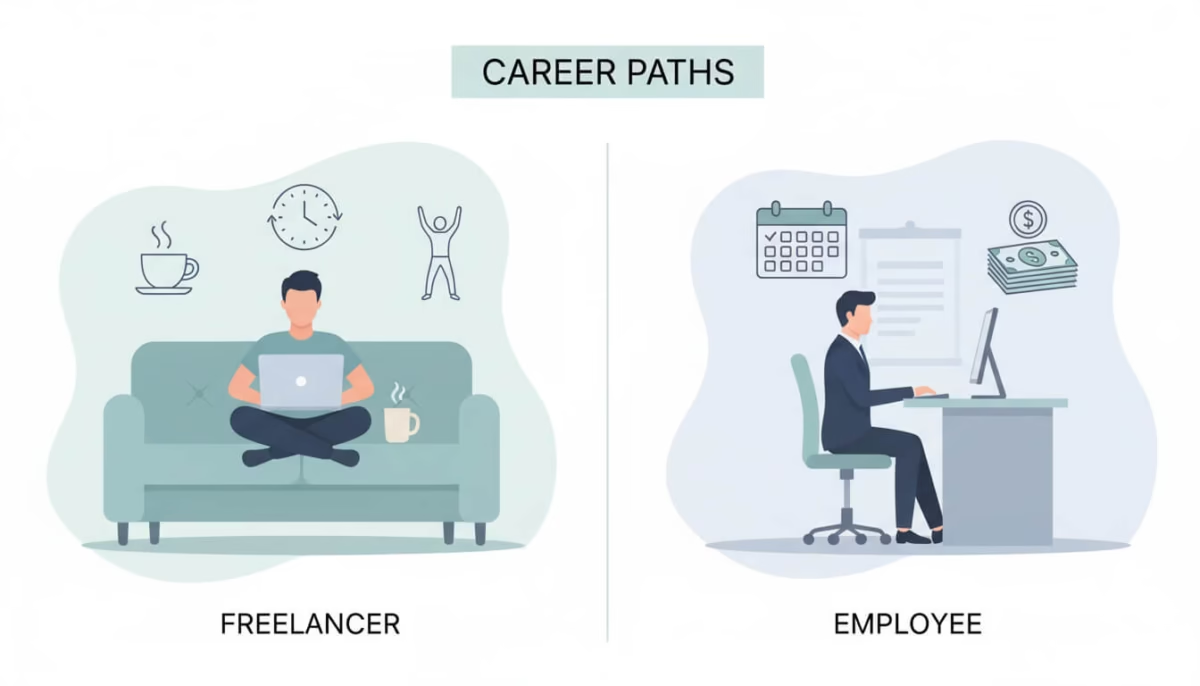
Introduction: Why This Decision Matters More Than Ever
More people than ever are questioning the traditional 9–5.
Remote work, freelancing platforms, and online businesses have changed how we think about careers. At the same time, full-time jobs still offer stability, structure, and predictable income — something many people value, especially in uncertain times.
So the real question isn’t “Is freelancing better than a full-time job?”
It’s “Which option fits your goals, personality, and current situation?”
In this guide, we’ll compare freelancing vs full-time employment honestly — without hype. You’ll learn:
- The real pros and cons of each path
- How income, stability, and freedom compare
- Who freelancing is best for
- Who should stick with a full-time job (or combine both)
By the end, you’ll be able to make a confident, informed decision.
1. What Is Freelancing? (And What It Really Looks Like)
Freelancing means working independently and offering services to clients on a project or contract basis — instead of being employed by one company.
1.1 How Freelancing Works in Practice
As a freelancer, you:
- Choose your clients
- Set your rates
- Decide when and where you work
- Handle your own taxes, tools, and workload
Common freelancing fields include:
- Writing and copywriting
- Design and video editing
- Web development and no-code
- Marketing, SEO, and email automation
- Virtual assistance and operations
1.2 The Reality Behind the Freedom
Freelancing offers flexibility — but also responsibility.
You’re responsible for:
- Finding clients
- Managing cash flow
- Staying disciplined
- Constantly upgrading skills
Freedom is real, but it’s earned.
1.3 Income in Freelancing: Variable but Scalable
Freelance income:
- Can start low
- Fluctuates month to month
- Has no fixed ceiling
Over time, skilled freelancers can earn more than many full-time roles, especially when they specialize or productize services.
2. What Is a Full-Time Job? (The Traditional Path Explained)
A full-time job means working for one employer with a fixed salary, defined role, and structured schedule.
2.1 What You Get With Full-Time Employment
Most full-time jobs offer:
- Stable monthly income
- Predictable working hours
- Benefits (health insurance, paid leave, retirement plans)
- Clear job expectations
For many people, this stability is essential.
2.2 Career Growth in a Full-Time Job
Career growth usually follows:
- Promotions
- Raises
- Expanded responsibilities
Progress is slower — but often more predictable than freelancing.
2.3 The Trade-Off: Stability vs Flexibility
Full-time jobs provide security, but often limit:
- Time freedom
- Location independence
- Income growth speed
For some, that trade-off is worth it. For others, it becomes frustrating over time.
3. Freelancing vs Full-Time Job: Income Comparison
Income is often the first thing people think about when comparing freelancing vs a full-time job — and for good reason.
3.1 Full-Time Job Income: Predictable but Limited
With a full-time job:
- You earn a fixed salary
- Paydays are predictable
- Raises happen on a set schedule
This consistency helps with budgeting, loans, and long-term planning. However, income growth is usually capped by:
- Company budgets
- Position limits
- Annual review cycles
Even top performers may see slow salary increases.
3.2 Freelancing Income: Unstable but Scalable
Freelancers don’t earn a “salary” — they earn per project, per hour, or per result.
Pros:
- No income ceiling
- You can raise rates anytime
- You can work with multiple clients
Cons:
- Income may fluctuate
- No guaranteed monthly pay
- Early stages can be financially stressful
However, experienced freelancers often stabilize income through retainers, long-term contracts, and recurring clients.
3.3 Which Pays More in the Long Run?
Short term: full-time jobs win on stability
Long term: freelancing wins on earning potential
The best choice depends on your:
- Financial cushion
- Risk tolerance
- Skill level
4. Work-Life Balance: Freedom vs Structure
Work-life balance looks very different in freelancing vs full-time employment.
4.1 Full-Time Jobs: Clear Boundaries (Most of the Time)
Full-time jobs usually have:
- Fixed working hours
- Clear off-time
- Separation between work and personal life
However, some roles come with:
- Long commutes
- Overtime expectations
- Limited vacation flexibility
Work-life balance depends heavily on company culture.
4.2 Freelancing: Flexible but Easy to Overwork
Freelancers control their schedule — but that freedom can backfire.
Common challenges:
- Working late to meet deadlines
- Saying yes to too many clients
- Difficulty “turning off” work
That said, freelancers who set boundaries often enjoy:
- Custom schedules
- Location freedom
- More personal time once systems are in place
4.3 Who Wins on Balance?
- If you value structure, full-time jobs are safer
- If you value flexibility, freelancing offers more freedom
Balance is possible in both — discipline is the key factor.
5. Job Security and Risk: Stability vs Independence
Security is where the difference between freelancing and full-time work becomes very clear.
5.1 Full-Time Job Security: Perceived Stability
Full-time jobs feel secure because:
- You have one employer
- Regular income continues
But layoffs, company shutdowns, and restructuring can happen — often without warning.
Security is relative, not guaranteed.
5.2 Freelancing Security: Diversified Risk
Freelancers don’t rely on one employer — they rely on multiple clients.
This means:
- Losing one client doesn’t end your income
- You control your pipeline
- Skills are transferable across industries
The risk is higher at the start — but decreases as you build experience and demand.
5.3 Which Is Actually Safer?
- Short-term safety: full-time jobs
- Long-term resilience: freelancing
Security comes from skills and adaptability, not titles.
6. Who Freelancing Is Best For
Freelancing isn’t for everyone — and that’s a good thing. Knowing whether you’re a good fit can save you years of frustration.
6.1 You Might Thrive as a Freelancer If You…
Freelancing works well if you:
- Are self-motivated and disciplined
- Enjoy autonomy and decision-making
- Are comfortable with uncertainty
- Like learning and upgrading skills regularly
- Can handle client communication and feedback
You don’t need to be fearless — but you do need to be proactive.
6.2 Freelancing Rewards Problem-Solvers
Successful freelancers don’t wait for instructions. They:
- Identify client problems
- Propose solutions
- Manage expectations
- Adapt quickly
If you enjoy building things from scratch, freelancing can be deeply satisfying.
6.3 Mindset Matters More Than Talent
Skills can be learned. Discipline, consistency, and patience are harder — but essential.
Freelancing favors people who treat it like a business, not a side hustle forever.
7. Who a Full-Time Job Is Best For
Full-time employment remains the right choice for many people — especially at certain life stages.
7.1 You Might Prefer a Full-Time Job If You…
A traditional job may suit you if you:
- Value financial predictability
- Prefer clear structure and guidance
- Want benefits like healthcare or pensions
- Don’t want to manage clients or sales
- Are early in your career and learning
There’s no shame in choosing stability.
7.2 Full-Time Jobs Are Great for Skill Foundations
Many professionals use full-time roles to:
- Build core skills
- Learn teamwork and systems
- Gain industry experience
- Build confidence
This foundation can later support a smooth transition into freelancing — if desired.
7.3 Stability Can Be a Strategic Choice
Choosing a full-time job doesn’t mean “settling.” For many, it’s a smart, intentional decision aligned with life priorities.
8. The Hybrid Option: Freelancing + Full-Time Job
You don’t have to choose one path forever.
8.1 Starting Freelancing on the Side
Many successful freelancers begin by:
- Keeping a full-time job
- Freelancing evenings or weekends
- Testing demand and pricing
- Building a portfolio safely
This reduces financial stress while you learn.
8.2 When to Go All-In
Signs you might be ready to freelance full-time:
- Consistent client inquiries
- Income matching or exceeding your salary
- A financial buffer (3–6 months)
- Clear niche and services
Timing matters more than courage.
8.3 The Hybrid Model Is Often the Smartest Path
For many people, the best solution is:
- Full-time stability + freelance freedom
- Income diversification
- Skill growth without pressure
There’s no “one right path” — only the right path for you.
9. Freelancing vs Full-Time Job: A Side-by-Side Comparison
Sometimes, the clearest answer comes from seeing everything in one place.
| Factor | Freelancing | Full-Time Job |
|---|---|---|
| Income | Variable, unlimited potential | Stable, capped |
| Schedule | Fully flexible | Fixed hours |
| Location | Work from anywhere | Often location-based |
| Benefits | Self-managed | Employer-provided |
| Security | Depends on clients & skills | Depends on employer |
| Growth | Fast, skill-driven | Structured, slower |
| Control | High autonomy | Limited autonomy |
This comparison highlights a key truth:
👉 Neither option is objectively better — they serve different priorities.
10. How to Decide: Ask Yourself These Key Questions
Instead of asking “Which pays more?”, ask questions that reflect your real life.
10.1 Financial Readiness
- Do you have savings to handle income fluctuations?
- Can you afford a few slow months?
If not, freelancing part-time may be the smarter first step.
10.2 Personality & Work Style
- Do you need structure or freedom?
- Do you enjoy managing your own workload?
Your temperament matters more than trends.
10.3 Long-Term Goals
- Do you want independence and scalability?
- Or stability and predictable growth?
Your answer today doesn’t lock you in forever — careers evolve.
Conclusion: Freelancing vs Full-Time Job — Which Is Better for You?
So, freelancing vs full-time job: which is better?
The honest answer is simple:
👉 The better option is the one aligned with your goals, skills, and current reality.
Freelancing offers freedom, flexibility, and uncapped income — but demands discipline, resilience, and self-management. It’s ideal for those who value autonomy, enjoy problem-solving, and are willing to accept short-term uncertainty for long-term upside.
Full-time jobs offer stability, structure, and predictability. They’re excellent for building foundational skills, maintaining financial security, and supporting life responsibilities. For many people, this path is not a compromise — it’s the right choice.
And remember:
You don’t have to choose one forever.
Many professionals start with a full-time job, explore freelancing on the side, then transition when the timing is right. Others freelance for years and later return to employment with stronger skills and leverage.
Your career is not a binary decision — it’s a flexible system.
Choose what fits now, stay adaptable, and focus on building skills that keep you valuable in any model.
Keep Learning, Keep Growing!
Here are more guides to level up your freelancing business:

