
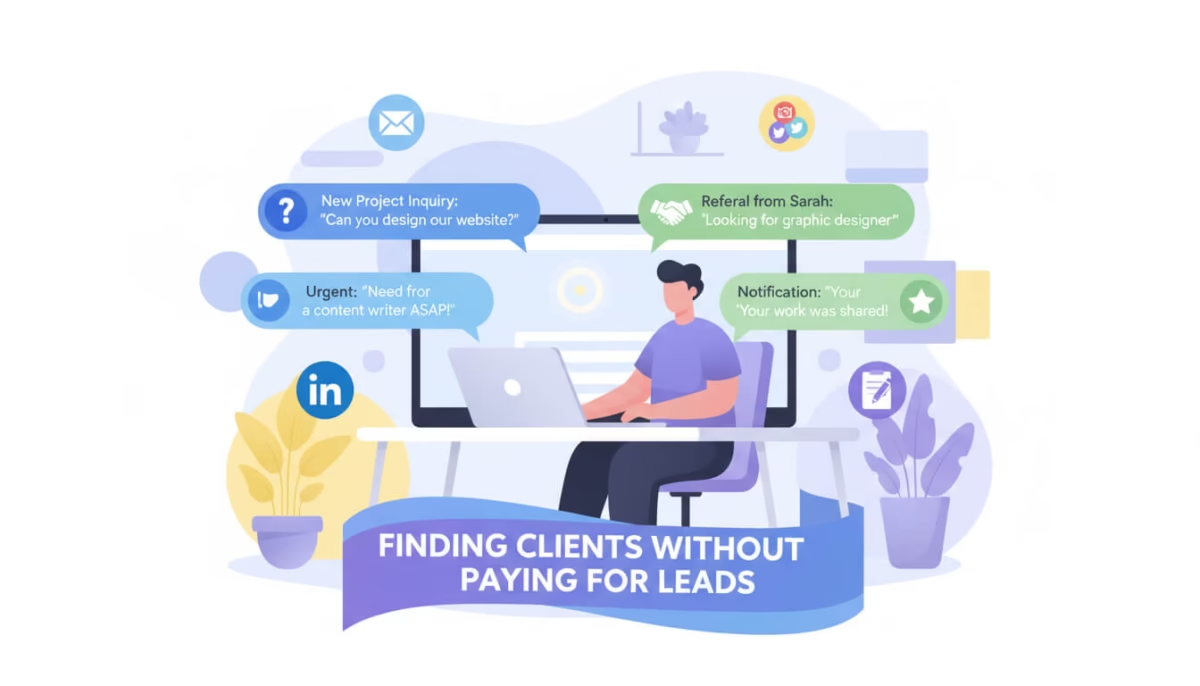
Introduction: Why Paying for Leads Isn’t the Only (or Best) Way
If you’ve ever tried freelancing, you’ve probably seen this advice everywhere:
“Just pay for leads.”
“Buy connects.”
“Upgrade to premium.”
And at first, it sounds logical. You pay, you get access, you get clients… right?
Not exactly.
The truth is, many freelancers burn money on lead platforms before they ever learn how to attract clients on their own. They end up competing on price, racing against dozens of other freelancers, and feeling stuck in a cycle they can’t control.
Here’s the good news:
👉 You can find freelance clients without paying for leads.
👉 And in many cases, those clients are higher quality, more respectful, and better paying.
In this guide, I’ll show you how to find freelance clients without paying for leads, using proven, realistic methods that work whether you’re a beginner or already freelancing part-time.
- No hacks.
- And, no spam.
- Also, no shady tactics.
Just clear systems you can build once — and reuse over and over.
1. Why You Don’t Need to Pay for Freelance Leads
Let’s start by clearing a big misconception.
Paying for leads doesn’t mean you’re doing freelancing “the right way.”
It just means you’re renting attention instead of building it.
The Hidden Problems With Paid Lead Platforms
Paid lead systems (job boards, pay-to-bid platforms, premium access) often come with trade-offs you don’t see at first:
- You’re competing with dozens (sometimes hundreds) of freelancers
- Clients are trained to shop for the lowest price
- You’re dependent on a platform’s rules, fees, and algorithm
- The moment you stop paying, the leads stop
This is why many freelancers feel stuck — they don’t own the relationship.
Even platforms themselves (like those discussed in Upwork’s hiring resources) encourage freelancers to eventually build direct client relationships outside the platform.
Free Client Acquisition = Ownership
When you find freelance clients without paying for leads, you gain:
- Control over who you work with
- The ability to position yourself on value, not price
- Long-term growth instead of short-term wins
Free methods compound over time.
One good client can:
- Refer you to others
- Come back with repeat work
- Turn into a long-term relationship
That rarely happens when clients see you as “just another bid.”
Why Free Clients Are Often Better Clients
Clients who find you instead of browsing marketplaces usually:
- Have clearer problems
- Value expertise more
- Respect your process
- Are easier to communicate with
This is why content marketing, referrals, outreach, and SEO are emphasized so heavily in modern freelancing advice across trusted business resources like HubSpot.
Important Mindset Shift
Instead of asking:
“Where can I find leads?”
Ask:
“Where are my ideal clients already spending time — and how can I show up there?”
That shift changes everything.
2. Get Clear on Who You Want as a Client (This Step Is Non-Negotiable)
If you skip this section, everything else becomes harder.
Most freelancers struggle to find clients not because there’s no demand, but because they’re targeting everyone.
And when you target everyone, no one feels like you’re speaking to them.
Why Vague Targeting Kills Your Outreach
If your message sounds like:
- “I help businesses grow”
- “I offer high-quality services”
- “I work with anyone who needs help”
Clients don’t connect. They move on.
Specificity builds trust.
You Don’t Need a Niche — You Need Focus
You don’t have to lock yourself into a niche forever.
But you do need a clear starting point.
Focus on:
- One type of client
- One main problem
- One core service
That’s enough.
Simple Client Clarity Framework
Ask yourself:
- Who do I want to work with? (industry or role)
- What problem do they urgently want solved?
- Why would they choose someone like me instead of a generic freelancer?
Example:
“I help small e-commerce brands improve email sales through simple automation.”
This instantly makes your outreach, portfolio, and messaging stronger.
Why Clients Trust Focused Freelancers More
From a client’s perspective:
- Specialists feel safer than generalists
- Clear positioning reduces risk
- It’s easier to imagine working with you
This principle is widely supported in sales and marketing psychology, and it’s why positioning advice from platforms like HubSpot emphasizes clarity over breadth.
How This Unlocks Free Client Channels
Once you’re clear on who you want:
- You know where to look
- And; you know what to say
- Also, you know what content to create
Finding freelance clients without paying for leads becomes strategic, not random.
3. Use Your Existing Network (Even If You Think You Don’t Have One)
Let me be very honest with you:
If you’ve ever gone to school, worked a job, joined a group, commented online, or helped someone —
👉 you already have a network.
Most freelancers don’t fail because they lack connections.
They fail because they don’t activate them correctly.
Why Your Network Is the Easiest Place to Start
People who already know you:
- Trust you more than a stranger
- Are more likely to reply
- Can refer you even if they don’t need you themselves
And the best part?
This costs zero money — just clarity and courage.
That’s exactly why your network is one of the fastest ways to find freelance clients without paying for leads.
Who Counts as “Your Network”?
Your network includes:
- Former coworkers or managers
- Friends and family
- Classmates or teachers
- Business owners you’ve helped casually
- Online contacts (LinkedIn, Facebook groups, WhatsApp, Slack, Discord)
You’re not asking them for work — you’re letting them know what you do now.
What NOT to Say (This Kills Responses)
Avoid vague messages like:
“Let me know if you hear of any opportunities.”
People don’t act on unclear requests.
What to Say Instead (Simple & Human)
Here’s a message that actually works:
“Hey [Name], quick update — I’m now offering [specific service] for [specific type of client].
If you or someone you know needs help with [clear problem], I’d love an intro.”
Why this works:
- Clear service
- Clear client
- Low pressure
- Easy to forward
This approach aligns with referral psychology explained in trusted sales resources like HubSpot’s referral marketing guides.
Pro Tip: Follow Up Once
If someone doesn’t reply:
- Wait 7–10 days
- Send a polite follow-up
- Never guilt or pressure them
Consistency > awkwardness.
4. Smart Cold Outreach (Without Being Spammy or Desperate)
Cold outreach gets a bad reputation — not because it doesn’t work, but because most people do it terribly.
When done right, cold outreach is one of the most powerful ways to find freelance clients without paying for leads.
Why Cold Outreach Still Works in 2026
Clients still:
- Read emails
- Use LinkedIn
- Respond to personalized messages
What they ignore?
- Copy-paste pitches
- Generic offers
- Messages that scream “I need work”
Your goal isn’t to sell.
Your goal is to start a relevant conversation.
Where to Find Clients for Free
Great places to identify potential clients:
- LinkedIn company pages
- Startup directories
- Business websites
- Twitter/X and founder posts
- Facebook and niche communities
Once you know who you help, finding them becomes much easier.
The 4-Part Cold Outreach Framework
Use this structure:
- Personal opening (prove you’re human)
- Specific observation or problem
- Clear value you offer
- Soft call to action
Cold Email Example (That Doesn’t Feel Like Sales)
“Hi [Name],
I came across [company] and noticed [specific detail].
I help [type of business] with [specific outcome], and I saw an opportunity around [problem].Would it make sense to share a quick idea that could help?”
- No pressure.
- Neighther nor attachment.
- And no pitch deck.
Just relevance.
This exact approach is also recommended in outbound sales playbooks used by B2B teams.
Why This Beats Paid Leads
Instead of:
- Competing with 50 freelancers
- Racing to underprice
- Paying for visibility
You:
- Speak directly to decision-makers
- Control the message
- Build relationships
That’s leverage.
5. Create Content That Attracts Clients (Even With a Small Audience)
Here’s something most freelancers misunderstand:
- You don’t need to be famous.
- Also, you don’t need thousands of followers.
- And, you just need the right content in the right place.
This is one of the most sustainable ways to find freelance clients without paying for leads.
Why Content Works So Well
Content does three powerful things:
- Shows your expertise
- Builds trust before the first message
- Pre-sells your service
By the time someone contacts you, they already believe you can help.
That’s why platforms like HubSpot emphasize content as a core trust-building strategy.
Best Platforms for Freelancers
Choose one to start:
- LinkedIn (great for B2B services)
- Personal website or blog (long-term SEO)
- Twitter/X (visibility + authority)
- Niche communities (high intent)
Don’t spread yourself thin.
What Kind of Content Attracts Clients?
Focus on:
- Common mistakes clients make
- Simple explanations of complex problems
- Case studies or breakdowns
- Actionable tips related to your service
Example:
“Why most small businesses lose money with email marketing — and how to fix it.”
That’s client-focused content.
Important Reminder
Content doesn’t replace outreach.
It supports it.
When someone checks your profile or website and sees helpful content, your close rate skyrockets.
6. Use Online Communities the Right Way (Without Self-Promotion)
Most freelancers join communities…
Then immediately post:
“Hi, I’m a freelance designer. DM me for work.”
That doesn’t attract clients — it repels them.
But when used correctly, online communities are goldmines for finding freelance clients without paying for leads.
Why Communities Work So Well
Communities already have:
- People discussing real problems
- Business owners asking questions
- Decision-makers looking for help
You’re entering active conversations, not interrupting strangers.
Best Types of Communities for Freelancers
Look for:
- Facebook groups for business owners or founders
- Slack or Discord groups in your niche
- Reddit communities (high intent if done respectfully)
- Indie founder groups and startup forums
Quality > quantity.
The Community Authority Method
Follow this simple rule:
👉 Help first. Offer later.
Here’s how:
- Answer questions clearly and generously
- Share small insights without links at first
- Build recognition through consistency
- Let people come to you
This mirrors relationship-based marketing principles used in B2B growth strategies.
Example That Works
Instead of:
“I offer web design services.”
Say:
“Here’s why your landing page might not convert — your headline doesn’t clearly state the outcome.”
That one comment can lead to:
- Profile clicks
- DMs
- Referrals
No selling required.
SEO & Trust Tip
Make sure your profile:
- Clearly states what you do
- Shows examples or content
- Feels human, not corporate
People always check before messaging you.
7. Build a Referral System (Not Just Random Referrals)
Referrals shouldn’t be accidental.
They should be engineered.
This is one of the most overlooked ways to find freelance clients without paying for leads — yet it’s one of the most powerful.
Why Referrals Convert Better
Referred clients:
- Trust you before the first call
- Close faster
- Pay higher rates
- Stay longer
And you don’t compete with dozens of freelancers.
The Simple Referral Formula
After a successful project, say this:
“If you know anyone else who needs help with [specific problem], feel free to connect us.”
That’s it.
No pressure.
No awkward pitch.
Upgrade to a Referral System
You can go one step further by:
- Partnering with complementary freelancers
- Offering a referral incentive (optional)
- Staying top-of-mind through follow-ups
Example:
- Web designer + copywriter
- Developer + marketer
This type of collaboration is common in freelance ecosystems and agency growth models.
Who to Ask for Referrals
- Happy clients
- Freelancers you collaborate with
- Consultants in adjacent fields
- Former employers
Referrals multiply your efforts.
8. Turn One Client Into Multiple Clients (The Snowball Effect)
This is where most freelancers leave money — and opportunities — on the table.
Finding clients is important.
But maximizing each client is how you grow without constant hustling.
How One Client Can Create Many
Every client gives you:
- Firstly, a case study
- Secondly, a testimonial
- Thirdly, a referral source
- Adnd lastly, a proof of results
If you don’t capture these, you’re starting from zero every time.
What to Do After Every Project
Create a simple post-project checklist:
- Ask for a testimonial
- Document results
- Request a referral
- Ask about additional needs
This turns freelance work into a repeatable system.
Why This Matters for Long-Term Growth
Instead of:
- Constant outreach
- Endless pitching
- Racing competitors
You build:
- Authority
- Momentum
- Predictable income
This is how freelancers slowly transition from survival mode to stability.
Final Thoughts (Human to Human)
If you take only one thing from this guide, let it be this:
👉 You don’t need to pay for leads to build a freelance career.
👉 You need clarity, consistency, and smart positioning.
Learning how to find freelance clients without paying for leads is about:
- Talking to the right people
- Solving real problems
- Building trust before selling
I’ve seen freelancers grow full-time incomes using only:
- Networks
- Outreach
- Content
- Referrals
No ads.
No platforms taking fees.
No race to the bottom.
🔑 Key Takeaways: How to Find Freelance Clients Without Paying for Leads
- You don’t need to pay for leads to find high-quality clients. Free strategies often bring better long-term relationships.
- Start with your network: past colleagues, friends, and online contacts are often overlooked but highly effective.
- Cold outreach works when it’s personalized, relevant, and soft-sell, not spammy.
- Content attracts clients without ads — write posts, share tips, and show expertise.
- Communities are goldmines if you help first and engage consistently.
- Referrals are powerful: build a simple system to encourage client and peer referrals.
- Maximize each client: request testimonials, track results, and ask for referrals to create a snowball effect.
- Clarity and positioning matter — niche down, define your ideal client, and speak directly to their problems.
Follow these strategies consistently, and you’ll create a predictable, free client acquisition system that grows over time.
Keep Learning, Keep Growing!
Here are more guides to level up your freelancing business:

