
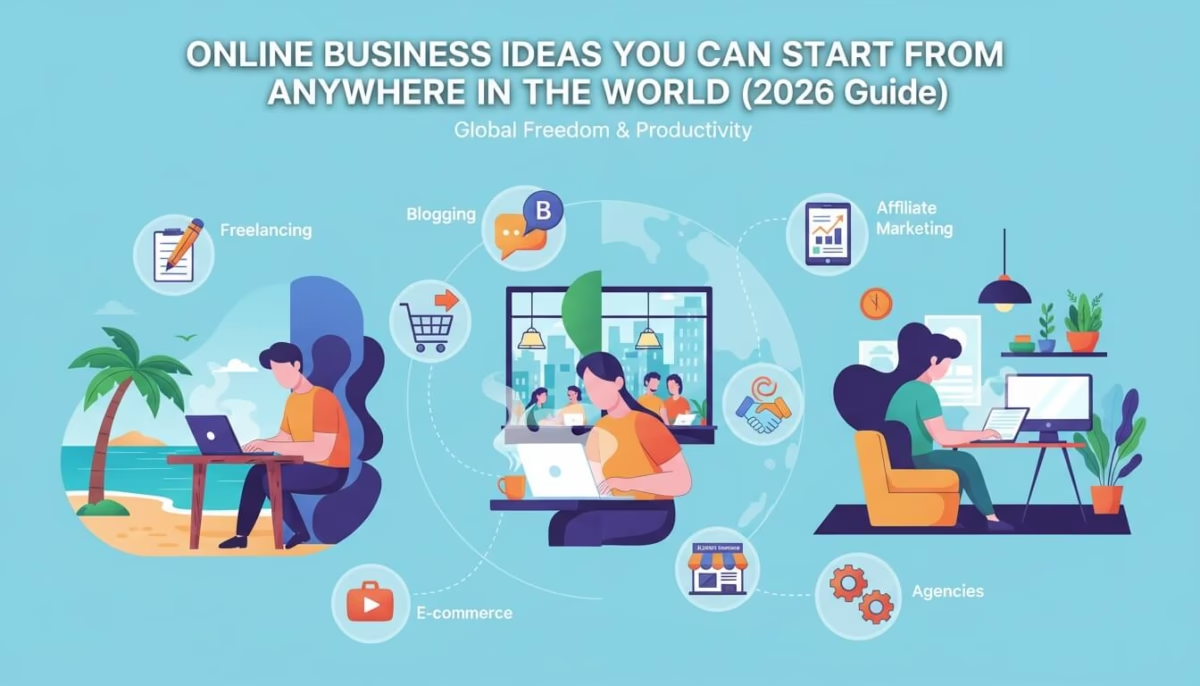
Introduction: Why “Location-Free” Businesses Are the Future
The idea of building a business tied to one country, one office, or one market is becoming outdated.
Today, millions of people are running online businesses from laptops while living in:
- different countries
- small towns
- shared apartments
- or even while traveling
If you have:
- an internet connection
- a phone or laptop
- basic digital skills
you can start an online business from anywhere in the world.
In this guide, I’ll walk you through the best online business ideas that are truly location-independent, explain how each one works, who it’s best for, and how you can realistically start — even with little money.
I’ll talk to you like a real human, not a guru. You’ll see what’s practical, what’s scalable, and what to avoid.
1. Freelancing (The Fastest Way to Make Money Online From Anywhere)
If you want to start an online business today, freelancing is the most realistic and proven option.
I’ll be honest with you:
freelancing is not about “passive income” or shortcuts.
It’s about turning skills into cash fast — and that’s exactly why it works so well anywhere in the world.
What freelancing really is (no hype)
Freelancing means you offer a service to clients online and get paid per:
- project
- hour
- or monthly contract
You don’t build a product first.
You don’t need traffic.
You don’t need a brand.
You just need:
- one usable skill
- one client
- and a way to communicate online
That’s it.
Why freelancing is 100% location-independent
Freelancing works globally because:
- work is delivered digitally
- communication happens via email, chat, or Zoom
- payments are sent online
Your client could be in:
- the US
- Europe
- Asia
…and it doesn’t matter where you are.
As long as you have:
- stable internet
- basic professionalism
- and reliability
you’re in the game.
High-demand freelance skills (2026-proof)
You don’t need to be a tech genius. Many high-paying freelancers started with simple skills and improved over time.
Some of the most in-demand freelance services:
- content writing & blogging
- copywriting (sales pages, emails)
- graphic design (Canva is enough to start)
- video editing (short-form is booming)
- web development (WordPress, Webflow)
- virtual assistance
- social media management
💡 Important:
You don’t need to be the best — just better than the client at that task.
Where freelancers find clients (trusted platforms)
Here are proven platforms where beginners actually get clients:
- Upwork – https://www.upwork.com
(Best for long-term and higher-paying clients) - Fiverr – https://www.fiverr.com
(Good for beginners and fast exposure) - Freelancer – https://www.freelancer.com
(Competitive, but global reach)
Later, many freelancers move off platforms and get clients via:
- cold email
- referrals
Why freelancing is the best first online business
Freelancing teaches you:
- how to sell
- how to communicate with clients
- how to price your work
- how to deliver value
And here’s the big secret most people don’t tell you:
👉 Freelancing is often the starting point for bigger online businesses
Agencies, courses, consulting, and products usually come after freelancing.
2. Affiliate Marketing (Earn From Anywhere by Recommending Products)
Affiliate marketing is one of the most popular online business models — and for good reason.
It allows you to make money without creating your own product, without customer support, and without inventory.
But let me be very clear with you upfront:
👉 Affiliate marketing is simple, not easy.
What affiliate marketing really means
Affiliate marketing means you earn money by recommending products or services you trust.
Here’s how it works in real life:
- You create content (blog, video, social post)
- You recommend a product with a special link
- Someone buys through that link
- You earn a commission
You don’t:
- handle refunds
- talk to customers
- manage deliveries
Your job is only traffic + trust.
Why affiliate marketing works from anywhere
Affiliate marketing is:
- fully online
- automated once set up
- global by nature
You can:
- write a blog post in Madagascar
- someone reads it in Canada
- buys a tool from the US
- and you earn money
That’s real location freedom.
Best platforms to join as an affiliate
Here are trusted affiliate networks used worldwide:
- Amazon Associates – https://affiliate-program.amazon.com
(Beginner-friendly, massive product range) - Impact – https://impact.com
(Top SaaS and global brands) - ShareASale – https://www.shareasale.com
(Popular for digital tools and services)
Many software companies also have direct affiliate programs (email tools, hosting, design tools, etc.).
Where affiliate marketing works best
Affiliate marketing performs best on:
- blogs (SEO traffic)
- YouTube (reviews & tutorials)
- email newsletters
- niche websites
Social media can work, but long-term success usually comes from search-based content.
The honest pros and cons
✅ Very low startup cost
✅ No product creation
✅ Scales globally
❌ Takes time to build trust
❌ Income is not instant
This is why affiliate marketing is perfect if you:
- can wait a few months
- like writing or explaining
- want long-term income
Smart beginner tip (important)
Don’t promote everything.
Pick:
- one niche
- one audience
- a few relevant products
People buy from trusted recommendations, not random links.
3. Blogging & Content Websites (Build a Global Asset That Pays Long-Term)
Blogging is often misunderstood.
Some people think blogging is “dead.”
Others think it’s only for writers.
Both are wrong.
In reality, blogging is one of the most powerful long-term online business models you can run from anywhere in the world — if you approach it strategically.
What blogging really is today
Blogging is not about personal diaries anymore.
A modern blog is:
- a content-based business
- built around search traffic (Google, Bing)
- monetized through multiple income streams
Think of a blog as a digital property that works for you 24/7.
You publish content once, and it can:
- attract visitors for years
- generate income while you sleep
- grow without limits
That’s why bloggers often call it a “compound business.”
Why blogging works from anywhere
Blogging is 100% location-independent because:
- content is published online
- readers come from search engines worldwide
- monetization happens digitally
You don’t need:
- meetings
- live calls
- fixed working hours
You just need:
- consistency
- basic SEO understanding
- patience
Many successful bloggers run their sites while traveling or living in low-cost countries — that’s not a coincidence.
How bloggers actually make money
A blog can earn money in several ways (often combined):
- Affiliate marketing
You recommend tools, services, or products inside your content and earn commissions. - Display ads
Once traffic grows, ad networks (like Google AdSense or premium networks) pay per page view. - Digital products
Ebooks, templates, courses, checklists, or memberships. - Sponsored content
Brands pay you to mention or review their products once your site has authority.
This diversification is what makes blogging stable long-term.
Blogging niches that work globally
Good blog niches solve problems, not trends.
Examples:
- online business & freelancing
- personal finance
- health & fitness
- education & skills
- travel & remote work
- software & tools
The key question is not:
❌ “What do I like?”
It’s:
✅ “What problem can I help people solve repeatedly?”
The honest truth about blogging (important)
Blogging is not fast money.
But it is:
- scalable
- defensible
- sellable
Many blogs are later sold as assets — just like real estate.
If you want an online business that can last 5–10 years or more, blogging is one of the strongest foundations.
4. Selling Digital Products (Scalable Income With No Shipping)
If freelancing trades time for money,
digital products trade value for scale.
This is where online businesses start to feel truly powerful.
What counts as a digital product?
A digital product is anything you create once and sell repeatedly online.
Common examples:
- ebooks
- online courses
- templates (Notion, Excel, Canva, etc.)
- paid guides or toolkits
- memberships or communities
No shipping.
No inventory.
No borders.
Once created, delivery is automatic.
Why digital products are perfect for a global lifestyle
Digital products are:
- instant to deliver
- accessible worldwide
- not affected by location or logistics
You can:
- create a product in one country
- sell it in 50+ countries
- wake up to sales notifications
This is why digital products are often called “borderless income.”
Who should sell digital products?
Digital products work best if you:
- already have knowledge or experience
- solved a specific problem yourself
- can explain things clearly
You don’t need to be an “expert.”
You just need to be one or two steps ahead of your audience.
Examples:
- freelancers selling proposal templates
- bloggers selling SEO checklists
- designers selling UI kits
- coaches selling step-by-step systems
How digital products are usually sold
Most digital products are sold through:
- personal websites
- email lists
- social media
- content platforms (blogs, YouTube)
Often, people combine:
- blogging or social content → builds trust
- email marketing → drives sales
- digital products → monetize deeply
This combination is extremely powerful.
Pros and cons (real talk)
✅ Very high profit margins
✅ Fully scalable
✅ Works globally
❌ Requires upfront work
❌ Needs audience or traffic
That’s why many people:
- start with freelancing
- build an audience via blogging or social media
- then launch digital products
It’s a natural progression.
5. E-Commerce & Dropshipping (Sell Products Globally Without Borders)
E-commerce is often the first thing people think of when they hear “online business.”
But many beginners assume you need:
- warehouses
- inventory
- large capital
That’s not true anymore.
Thanks to dropshipping and modern fulfillment, you can run an e-commerce business from anywhere in the world with just a laptop and internet.
What e-commerce really means today
At its core, e-commerce means selling physical or digital products online.
With dropshipping, you:
- create an online store
- list products from a supplier
- market the products
- the supplier ships directly to the customer
You never touch the product.
Your role is branding, marketing, and customer experience.
Why dropshipping works globally
Dropshipping is location-independent because:
- suppliers handle storage and shipping
- orders are processed automatically
- payments happen online
You could be:
- living in Africa
- sourcing products from Asia
- selling to customers in Europe or the US
Geography doesn’t matter — logistics do.
Popular platforms to get started
Most beginners use:
- Shopify – https://www.shopify.com
- WooCommerce – https://woocommerce.com
For sourcing products:
- AliExpress – https://www.aliexpress.com
- CJ Dropshipping – https://cjdropshipping.com
(Over time, many successful sellers switch to private suppliers for better quality and margins.)
What makes e-commerce succeed (and fail)
E-commerce success is less about the product and more about:
- branding
- customer trust
- marketing
Common beginner mistakes:
❌ copying saturated products
❌ ignoring delivery times
❌ weak product descriptions
Winning stores focus on:
✅ solving a clear problem
✅ professional design
✅ honest marketing
Is e-commerce beginner-friendly?
Yes — but it requires:
- learning ads or SEO
- handling customer support
- managing refunds
It’s not “easy money,” but it’s one of the most scalable global business models when done right.
6. Online Coaching & Consulting (Sell Knowledge, Not Products)
If you have experience, results, or expertise in any field, online coaching or consulting can become one of the highest-paying online businesses you can run from anywhere.
And here’s the key:
You don’t need millions of followers.
What online coaching really is
Online coaching or consulting means helping people:
- solve specific problems
- reach specific goals
- avoid costly mistakes
You deliver value through:
- Zoom calls
- group sessions
- messaging platforms
- structured programs
Examples:
- business coaching
- fitness coaching
- career consulting
- marketing strategy
- mindset or productivity coaching
Why coaching works worldwide
Coaching is location-free because:
- calls happen online
- results matter more than location
- time zones can be scheduled
Clients don’t care where you live.
They care whether you can help them win.
Why coaching is high-income by nature
Unlike products, coaching:
- is personalized
- solves urgent problems
- delivers transformation
That means:
- higher pricing
- fewer clients needed
- deeper client relationships
Many coaches earn more with:
- 5–10 clients
than product sellers do with hundreds of customers.
How beginners can start coaching
You don’t need a certification to start.
You need:
- real experience
- proof of results (yours or others’)
- a clear offer
A simple starting offer:
“I help [who] achieve [result] in [timeframe]”
That’s enough to begin.
Scaling beyond 1-on-1
Smart coaches later scale by:
- group coaching
- recorded programs
- memberships
- hybrid models
This turns coaching into a location-independent business system, not just a service.
7. YouTube, Podcasting & Content Creation (Build a Global Audience That Pays)
Content creation is no longer just for influencers.
In 2026 and beyond, content is a business asset — and platforms like YouTube and podcasts allow you to reach a global audience without borders, offices, or teams.
If you can explain, teach, review, or entertain, this model is open to you.
What content creation really means
Running a content-based online business means:
- creating valuable content consistently
- attracting an audience over time
- monetizing attention in multiple ways
You don’t need viral videos.
You need useful content that solves problems.
This is why educational and niche content often outperforms entertainment long-term.
Why YouTube and podcasts work from anywhere
These platforms are:
- free to publish on
- global by default
- discoverable through search
You can record:
- from your home
- with basic equipment
- on your own schedule
Once published, your content can generate:
- views
- subscribers
- income
…for years.
How creators actually make money
Content creators monetize through:
- ads (YouTube AdSense)
- affiliate marketing
- sponsorships
- selling digital products
- coaching or consulting
Most high-earning creators combine income streams, not rely on ads alone.
What niches perform best
Successful content niches often include:
- online business & freelancing
- software & tools
- education & skills
- personal finance
- health & self-improvement
The key is not popularity — it’s audience trust.
People follow creators who:
- explain clearly
- stay consistent
- feel relatable
The long-term advantage
Content creation compounds.
A video or podcast episode you create today can:
- attract traffic next month
- generate leads next year
- sell products years later
That’s why many online businesses use content as their core growth engine.
8. Remote Agencies & Micro-Agencies (Scale Services Without Doing Everything Yourself)
At some point, many freelancers hit a limit:
“I’m fully booked, but income is capped.”
That’s where agencies come in.
A remote agency lets you:
- sell services
- delegate work
- scale revenue
…without being tied to one location.
What a remote agency really is
A remote agency is simply:
- a service business
- with systems
- and a small distributed team
You focus on:
- getting clients
- managing quality
- growing the brand
Others handle the execution.
Why agencies are perfect for global work
Remote agencies thrive because:
- teams work online
- talent is global
- clients don’t care where you operate from
You can hire:
- designers from one country
- writers from another
- developers from anywhere
All coordinated digitally.
Popular agency service types
Some of the most common remote agencies offer:
- web design & development
- digital marketing
- SEO services
- social media management
- content production
Most agencies start from:
👉 one freelancer scaling their existing service
How agencies grow faster than solo businesses
Agencies scale by:
- raising prices
- adding team members
- selling retainers
Instead of:
- trading time for money
You build:
- processes
- systems
- predictable income
That’s a big shift — and a powerful one.
Is an agency right for everyone?
Not necessarily.
Agencies require:
- leadership
- communication
- organization
But for those who want:
- higher income ceilings
- long-term business value
- team-based growth
This model is one of the strongest online businesses you can run from anywhere.
9. Choosing the Best Online Business for You
By now, you’ve seen freelancing, affiliate marketing, blogging, digital products, e-commerce, coaching, content creation, and agencies.
So, which one should you start?
Ask yourself these questions:
- What skills do I already have?
Use existing skills to start faster. Freelancing or consulting is ideal if you can deliver value immediately. - How much time can I invest?
- Few hours/week → consider blogging, affiliate marketing, or small digital products.
- Full-time → freelancing, coaching, or e-commerce may bring quicker revenue.
- What budget do I have?
- $0–$50 → start freelancing, blogging, or affiliate marketing.
- $100–$500 → digital products or e-commerce setup.
- $500+ → coaching, content platforms, or scaling an agency.
- Do I prefer short-term income or long-term growth?
- Quick income → freelancing or consulting.
- Scalable/long-term → blogging, digital products, agencies.
- Do I like interacting with people or creating assets?
- People-focused → coaching, freelancing, agency.
- Asset-focused → blogging, YouTube, digital products.
Conclusion: Start Simple, Scale Globally
The world of online business is vast and exciting, but the first step is always the same: start with what you can do today.
- You don’t need millions in the bank.
- You don’t need perfect tools.
- You don’t need thousands of followers.
What you need is one model, one skill, one audience, and consistent action.
Start small. Learn fast. Scale smart.
Remember, all the models mentioned — freelancing, digital products, blogging, e-commerce, coaching, content, or agencies — are proven ways to earn from anywhere in the world.
The difference between success and failure is action + persistence.
💡 Pro Tip: Many successful entrepreneurs start with freelancing or a small digital product and gradually expand into other models. You can mix multiple models over time to maximize income and location freedom.
🔑 Key Takeaways
- Online businesses let you earn from anywhere in the world.
- Freelancing is the fastest and easiest model to start.
- Affiliate marketing, blogging, and content creation scale over time.
- Digital products and coaching allow you to monetize expertise.
- E-commerce & dropshipping are scalable but need marketing skills.
- Remote agencies can multiply income through delegation and systems.
- Start with one model, focus on execution, then expand.
- Success depends on patience, consistency, and problem-solving.

