Introduction: Why Re-Engagement Matters More Than You Think
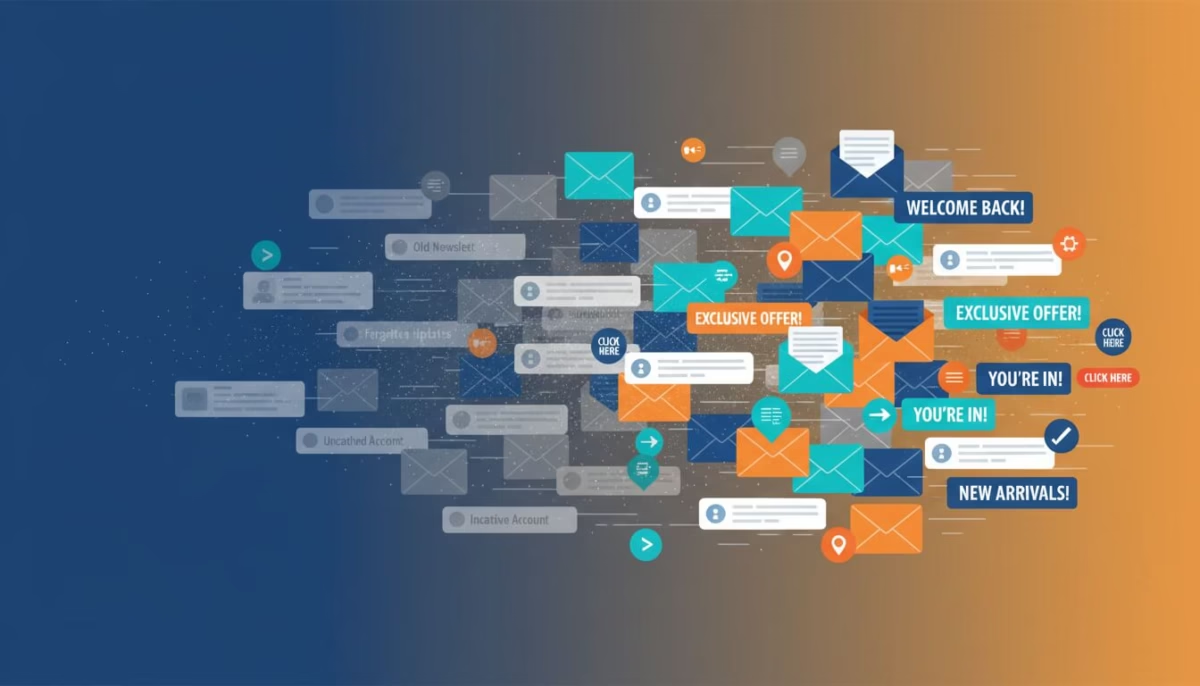
Over time, every email list goes quiet.
Subscribers stop opening.
Clicks disappear.
Sales slow down.
But here’s the truth most beginners miss: inactive subscribers aren’t useless — they’re just disengaged.
A well-planned re-engagement campaign can:
- Reactivate subscribers who already know your brand
- Improve deliverability and inbox placement
- Increase revenue without growing your list
In this guide, you’ll learn how re-engagement campaigns work, when to use them, and how to win back subscribers without damaging your list.
1. What Is a Re-Engagement Campaign?
A re-engagement campaign is a targeted email sequence designed to reconnect with inactive subscribers and encourage them to engage again — or opt out cleanly.
Instead of blasting promotions to people who stopped listening, you:
- Identify inactive contacts
- Send focused, intentional emails
- Give them a reason to stay
This improves both engagement metrics and list quality.
1.1 Who Counts as an “Inactive” Subscriber?
An inactive subscriber typically:
- Has not opened emails for 30–90 days (depending on your send frequency)
- Has not clicked links
- Has not purchased or replied
The exact definition depends on your business, but the goal is the same: identify people who stopped interacting.
1.2 Why Ignoring Inactive Subscribers Is a Mistake
Keeping disengaged subscribers:
- Hurts open rates
- Signals poor engagement to inbox providers
- Increases spam risk over time
According to deliverability experts, engagement is a key signal used by inbox providers to decide where your emails land (inbox vs promotions vs spam).
Cleaning and reactivating your list protects long-term performance.
2. Why Re-Engagement Campaigns Are Critical for Email Deliverability
Re-engagement isn’t just about clicks — it’s about inbox survival.
Email providers like Gmail and Outlook track:
- Opens
- Clicks
- Replies
- Deletes without reading
Low engagement tells them your emails aren’t wanted.
2.1 How Re-Engagement Improves Deliverability
A smart re-engagement campaign helps you:
- Remove uninterested subscribers
- Focus sends on engaged users
- Improve open and click rates
- Reduce spam complaints
Fewer emails sent to disengaged users = stronger sender reputation.
2.2 Reactivation vs List Cleaning (You Need Both)
Re-engagement campaigns do two things:
- Win back interested subscribers
- Identify who should be removed
If someone doesn’t respond after multiple attempts, removing them is healthy — not failure.
A smaller, engaged list always outperforms a large, silent one.
2.3 When to Run a Re-Engagement Campaign
Run one when you notice:
- Declining open rates
- Lower click-through rates
- Rising unsubscribe or spam complaints
- Rapid list growth without engagement growth
Most businesses should run re-engagement campaigns every 3–6 months.
3. How to Identify Inactive Subscribers the Right Way
Before sending re-engagement emails, you need to define who is truly inactive. Guessing leads to poor results and deliverability issues.
3.1 Define Inactivity Based on Behavior
Common inactivity rules include:
- No opens in the last 60–90 days
- No clicks in the last 90–180 days
- No purchases or replies during that period
Your sending frequency matters.
Daily senders may use shorter windows, while weekly senders need longer ones.
3.2 Segment Inactive Subscribers Properly
Create a dedicated segment such as:
“No opens OR clicks in 90 days”
Exclude:
- Recent buyers
- Support conversations
- Subscribers who just joined
This ensures you’re targeting the right audience.
3.3 Why Accurate Segmentation Matters
Targeting the wrong people:
- Lowers campaign performance
- Triggers spam filters
- Confuses engaged subscribers
Precision improves both results and sender reputation.
4. The Psychology Behind Successful Re-Engagement Campaigns
Re-engagement works when it taps into human motivation, not pressure.
4.1 Why Subscribers Go Quiet
Most inactive subscribers didn’t lose interest completely. Common reasons include:
- Inbox overload
- Content mismatch
- Changed priorities
- Emails feeling repetitive
Understanding this helps you respond with empathy, not force.
4.2 The Three Psychological Triggers That Work
Effective re-engagement emails use:
Curiosity
- “Still interested?”
- “Did you miss this?”
Relevance
- Remind them why they signed up
- Highlight specific benefits
Control
- Let them choose what they receive
- Make unsubscribing easy
Giving control builds trust — and trust reactivates engagement.
4.3 Why Aggressive Selling Fails
Hard selling to inactive subscribers:
- Feels tone-deaf
- Increases unsubscribes
- Harms deliverability
Re-engagement emails should restart the relationship, not force a sale.
5. High-Converting Re-Engagement Email Types (With Examples)
Use a short sequence of 2–4 emails, each with a clear purpose.
5.1 The “We Miss You” Email
Purpose: Reopen communication gently.
Example subject lines:
- “Still want emails like this?”
- “Just checking in 👋”
Best practices:
- Friendly tone
- Clear value reminder
- Low pressure CTA
5.2 The Value Reminder Email
Purpose: Remind them why staying subscribed is worth it.
Include:
- Best content
- Popular resources
- High-value tips
This works well for bloggers, educators, and creators.
5.3 The Preference Center Email
Purpose: Let subscribers customize or reduce frequency.
Options to offer:
- Fewer emails
- Different topics
- Monthly digest
This prevents unnecessary unsubscribes.
5.4 The Breakup (Last Chance) Email
Purpose: Clean your list responsibly.
Example subject lines:
- “Should we stop emailing you?”
- “Last email unless you click”
This email:
- Creates urgency
- Improves engagement
- Protects deliverability
If they don’t respond — remove them.
5.5 Incentive-Based Re-Engagement (Optional)
Use sparingly:
- Discounts
- Free resources
- Exclusive access
This works best for ecommerce or paid offers.
6. How to Structure a High-Performing Re-Engagement Sequence
Re-engagement campaigns work best as short, intentional sequences, not one-off emails.
6.1 The Ideal Re-Engagement Sequence Length
For most online businesses:
- 2–4 emails total
- Sent over 7–14 days
This creates urgency without overwhelming inactive subscribers.
6.2 Sample Re-Engagement Sequence Framework
- Email 1 — Friendly Check-In
Goal: Restart the conversation
Tone: Warm, human, non-salesy - Email 2 — Value Reminder
Goal: Re-establish relevance
Content: Best resources, helpful tips, or popular content - Email 3 — Choice & Control
Goal: Let them decide
Options: Stay subscribed, change preferences, or unsubscribe - Email 4 — Breakup Email (Optional)
Goal: Clean the list
Message: “We’ll remove you unless you click”
6.3 One Clear Action Per Email
Each email should have:
- One primary CTA
- Minimal distractions
- Simple language
Clarity increases response rates.
7. Automating Re-Engagement Campaigns (Set It Once)
Automation ensures re-engagement runs consistently without manual effort.
7.1 Triggering Re-Engagement Automation
Common triggers:
- No opens in 60–90 days
- No clicks in a defined period
- Inactivity after a purchase cycle
Most email platforms allow automation based on engagement behavior.
7.2 What Happens After Engagement
If a subscriber:
- Opens → return them to your main list
- Clicks → tag as re-engaged
- Replies → prioritize engagement
Immediately stop the re-engagement sequence once they engage.
7.3 What Happens If They Don’t Respond
If there’s no engagement after the final email:
- Suppress or remove them
- Move them to a cold list
- Stop sending regular campaigns
This protects sender reputation and inbox placement.
7.4 Tools That Support Re-Engagement Automation
Beginner-friendly platforms include:
- MailerLite
- Brevo
- ConvertKit
- Mailchimp
These tools offer behavior-based triggers and automated workflows.
8. Timing, Frequency, and Best Practices
When and how you send re-engagement emails matters as much as what you send.
8.1 Best Days and Times to Send
General best practices:
- Weekdays over weekends
- Mid-morning or early afternoon
- Avoid sending too frequently
Always test timing based on your audience.
8.2 Keep Re-Engagement Emails Short
Inactive subscribers have low attention:
- Use short paragraphs
- Clear CTA buttons
- Simple layouts
The goal is a quick decision, not long reading.
8.3 Use Plain-Text or Simple Designs
Re-engagement emails often perform better when they:
- Look personal
- Avoid heavy visuals
- Feel like a real message
This increases trust and reply rates.
8.4 Monitor Engagement Carefully
Watch:
- Open rate
- Click rate
- Unsubscribes
- Spam complaints
If metrics worsen, pause and adjust.
9. Advanced Re-Engagement Tips for Better Results
Once you’ve mastered the basics, a few advanced tweaks can significantly improve reactivation rates.
9.1 Use Behavioral Clues From the Past
Look at what inactive subscribers engaged with before:
- Blog posts
- Products
- Topics
- Lead magnets
Reference those interests in your re-engagement emails to restore relevance.
9.2 Change the Format (Not Just the Message)
If your usual emails are long:
- Try short plain-text emails
If they’re text-heavy:
- Try one strong visual
A change in format signals something new and can recapture attention.
9.3 Encourage Replies, Not Just Clicks
Asking a simple question like:
“Are you still interested in emails like this?”
Encourages replies, which:
- Boost engagement signals
- Improve deliverability
- Make emails feel personal
9.4 Test Subject Lines Carefully
Re-engagement subject lines work best when they’re:
- Honest
- Curious
- Human
Avoid clickbait — trust is more important than opens here.
10. Common Re-Engagement Mistakes to Avoid
Even well-intentioned campaigns can fail if these mistakes are made.
10.1 Waiting Too Long to Act
Letting subscribers stay inactive for months or years:
- Harms engagement metrics
- Increases spam risk
Re-engage early — or remove them cleanly.
10.2 Being Afraid to Remove Subscribers
Removing inactive contacts:
- Improves open rates
- Improves deliverability
- Strengthens long-term performance
A smaller, engaged list always outperforms a large, inactive one.
10.3 Using Discounts as the First Step
Leading with discounts:
- Trains subscribers to wait for incentives
- Attracts low-quality engagement
Use incentives sparingly and strategically.
10.4 Forgetting Mobile Optimization
Most inactive subscribers still open on mobile when they do engage.
If your email isn’t mobile-friendly, you lose the opportunity.
Conclusion: How Re-Engagement Campaigns Revive “Dead” Subscribers
Re-engagement campaigns exist for one simple reason: email lists naturally decay. People change jobs, interests shift, inboxes get crowded, and even great content can get lost. That doesn’t mean your subscribers are “bad” or that email marketing is failing.
So, how do you revive dead subscribers?
You do it by reintroducing relevance, restoring trust, and giving people control over whether they stay.
Instead of forcing attention, re-engagement campaigns invite participation. They remind subscribers why they joined in the first place, show what they’ve missed, and make it easy to either re-engage or opt out gracefully. That clarity benefits both sides.
Just as important, re-engagement campaigns directly protect email deliverability. Internet service providers judge your emails based on engagement signals. When too many subscribers ignore your messages, your sender reputation suffers — even among engaged readers. By reactivating interested subscribers and removing unresponsive ones, you send a strong signal that your emails are wanted.
This leads to a key truth behind effective email marketing:
A smaller, engaged list will always outperform a large, silent one.
Re-engagement campaigns also help you refocus your strategy. They reveal:
- Which content actually resonates
- Which segments are worth prioritizing
- When it’s time to adjust frequency or messaging
Over time, this makes every future campaign stronger — not just the re-engagement sequence itself.
Ultimately, re-engagement campaigns are not about “saving everyone.” They are about building a healthier email ecosystem where the people who stay actually want to hear from you. When you respect your subscribers’ attention, they reward you with opens, clicks, and trust.
If email marketing is a long-term asset for your business, re-engagement campaigns are not optional — they’re essential.
Key Takeaways
- Inactive subscribers are normal — ignoring them hurts deliverability
- Re-engagement campaigns revive interest and clean your list
- Short, empathetic sequences outperform aggressive promotions
- Giving subscribers control increases trust and engagement
- Automation makes re-engagement scalable and consistent
- Removing unresponsive contacts improves long-term email performance